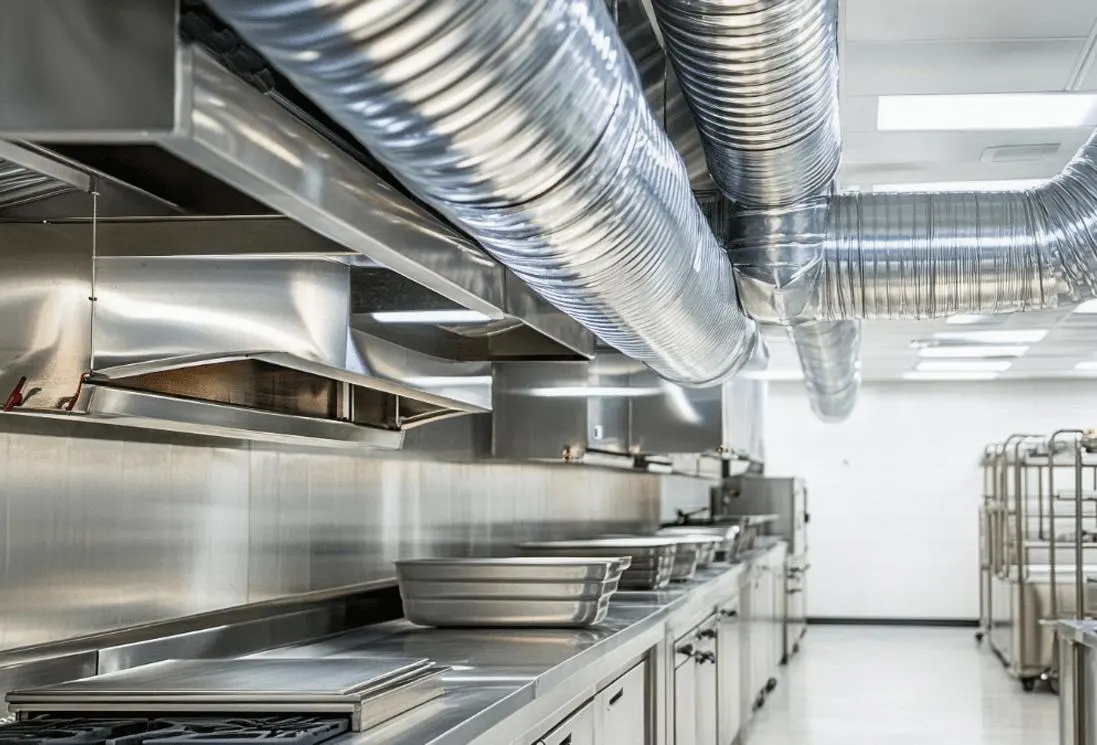
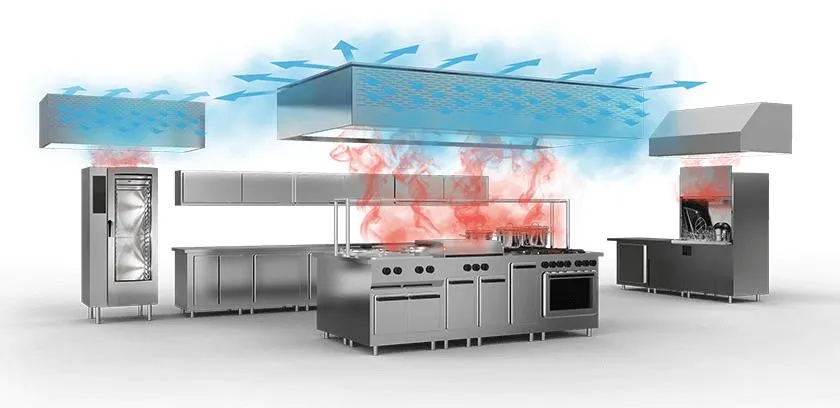
Commercial kitchen ventilation technology has advanced significantly in recent years, moving beyond basic extraction systems to intelligent, energy-efficient solutions that improve safety, reduce operating costs, and simplify maintenance. As restaurants, hotels, schools, care homes, and food production facilities face increasing pressure to improve efficiency and meet environmental goals, modern ventilation systems are becoming smarter, more sustainable, and easier to manage. Recent industry trends show a strong focus on demand-based ventilation, IoT connectivity, advanced filtration, and predictive maintenance rather than simply installing larger extraction systems.
In this guide, we’ll explore the latest commercial kitchen ventilation technologies that are shaping the future of professional kitchens.
Why Ventilation Technology Is Evolving
Modern commercial kitchens require more than effective smoke extraction. Businesses are looking for systems that can:
- Reduce energy consumption
- Improve indoor air quality
- Lower maintenance costs
- Increase fire safety
- Support sustainability goals
- Provide real-time system monitoring
- Ensure compliance with UK regulations
These priorities are driving innovation across the ventilation industry.
1. Demand-Controlled Kitchen Ventilation (DCKV)
One of the biggest innovations is Demand-Controlled Kitchen Ventilation (DCKV).
Instead of running extraction fans at full speed throughout the day, DCKV systems use sensors to monitor:
- Heat
- Smoke
- Steam
- Cooking activity
- Air quality
The system automatically adjusts fan speeds based on real-time demand.
Benefits
- Lower electricity costs
- Reduced fan wear
- Quieter kitchen operation
- Improved energy efficiency
- Longer equipment lifespan
This technology can significantly reduce unnecessary energy use during quieter periods.
2. Smart IoT Monitoring
Modern extraction systems increasingly include Internet of Things (IoT) connectivity.
Kitchen managers can monitor:
- Fan performance
- Motor status
- Airflow levels
- Filter condition
- System faults
- Maintenance schedules
Many systems send automatic alerts when servicing is required, helping prevent unexpected failures.
3. Predictive Maintenance
Traditional maintenance follows fixed schedules.
Today’s smart ventilation systems use sensors and performance data to predict when components need attention.
This approach allows engineers to replace worn parts before breakdowns occur.
Advantages
- Reduced downtime
- Lower repair costs
- Improved reliability
- Better maintenance planning
Predictive maintenance is becoming a key feature of modern commercial ventilation systems.
4. High-Efficiency Grease Filtration
Filtration technology continues to improve.
Modern systems use advanced grease filters designed to:
- Capture more grease particles
- Reduce duct contamination
- Improve airflow
- Lower fire risks
- Extend cleaning intervals
Some systems also incorporate additional filtration stages for enhanced odour control.
5. UV-C Grease Control Technology
Some commercial kitchens are adopting UV-C technology inside extraction canopies.
UV-C light helps break down grease particles before they accumulate inside ductwork.
Potential benefits include:
- Reduced grease build-up
- Lower fire risk
- Improved hygiene
- Less frequent duct cleaning
- Better odour control
This technology is especially valuable in high-volume kitchens.
6. Energy Recovery Systems
Energy efficiency is now a major priority.
Modern ventilation systems may include heat recovery technology that captures waste heat from extracted air and reuses it elsewhere in the building.
Benefits include:
- Reduced heating costs
- Lower energy consumption
- Improved sustainability
- Reduced carbon emissions
Energy recovery systems are becoming increasingly attractive for larger commercial facilities.
7. Variable Speed Fan Technology
Variable speed drives (VSDs) allow extraction fans to adjust their operating speed automatically.
Instead of continuously running at maximum power, fans only use the energy required for current cooking conditions.
Advantages include:
- Reduced electricity usage
- Lower noise levels
- Less equipment wear
- Improved airflow control
8. Improved Air Quality Monitoring
Many new systems include sensors that continuously monitor indoor air quality.
These sensors can detect:
- Smoke
- Temperature
- Humidity
- Airborne particles
- Carbon dioxide levels
Real-time monitoring helps maintain healthier working conditions while optimising ventilation performance.
9. Sustainable Ventilation Design
Sustainability is influencing every aspect of commercial kitchen design.
Modern systems focus on:
- Energy-efficient motors
- Low-power control systems
- Reduced carbon emissions
- Recyclable materials
- Longer equipment lifespans
Businesses increasingly view ventilation upgrades as part of broader environmental initiatives.
10. Digital Control Panels
Advanced touchscreen control panels are replacing traditional manual switches.
Modern interfaces allow operators to:
- Monitor airflow
- Adjust fan speeds
- Schedule operating hours
- View maintenance reminders
- Access performance data
- Monitor energy usage
These systems simplify day-to-day management while improving overall efficiency.
11. Modular Ventilation Systems
Modular ventilation designs are becoming more popular for businesses expecting future expansion.
These systems offer:
- Easier installation
- Flexible upgrades
- Reduced downtime
- Simplified maintenance
- Better scalability
Modular solutions are particularly useful for growing restaurant groups and food production facilities.
12. Better Integration with Building Management Systems (BMS)
Many ventilation systems now integrate with Building Management Systems.
This enables central control of:
- HVAC
- Ventilation
- Lighting
- Energy consumption
- Fire safety systems
Integrated control improves operational efficiency while providing valuable performance data for facility managers.
Benefits of Modern Ventilation Technology
Upgrading to the latest ventilation technology offers several long-term advantages.
Lower Energy Costs
Smart controls and demand-based operation reduce unnecessary electricity usage.
Improved Fire Safety
Advanced filtration and grease management minimise grease accumulation inside ductwork.
Better Staff Comfort
Cleaner air and improved temperature control create a healthier working environment.
Reduced Maintenance Costs
Predictive maintenance and improved system design help prevent expensive repairs.
Enhanced Compliance
Modern systems are designed to support compliance with current UK ventilation and fire safety standards.
Greater Operational Efficiency
Automated controls reduce manual intervention and optimise system performance throughout the day.
Is It Worth Upgrading an Older Ventilation System?
If your extraction system is more than 10–15 years old, upgrading to modern technology can provide significant benefits.
An upgrade may deliver:
- Lower operating costs
- Improved airflow
- Better energy efficiency
- Reduced noise
- Easier maintenance
- Enhanced safety
- Improved reliability
For many businesses, the long-term savings in energy and maintenance can help offset the initial investment.
Final Thoughts
Commercial kitchen ventilation technology is evolving rapidly, with smarter controls, energy-efficient designs, and advanced monitoring systems becoming the new standard. Innovations such as demand-controlled ventilation, IoT connectivity, UV-C grease control, predictive maintenance, and energy recovery are helping businesses improve safety, reduce operating costs, and create healthier kitchen environments.
Whether you’re planning a new kitchen or upgrading an existing extraction system, investing in modern ventilation technology can deliver long-term value through improved performance, regulatory compliance, lower energy bills, and a more comfortable workplace for your team.