Maintaining kitchen extraction in a leased restaurant depends on the commercial lease, the ownership of the ventilation equipment and the responsibilities agreed between the landlord and tenant. There is no universal rule that automatically makes one party responsible for every extraction fan, canopy, ductwork section or maintenance task.
Understanding restaurant extraction landlord tenant responsibilities starts with reviewing the lease’s repairing obligations, equipment schedules, service charge provisions and any agreements covering alterations or shared ventilation systems.
A restaurant tenant may be responsible for routine servicing, cleaning and equipment installed for their business, while a landlord may retain responsibility for specified building services or shared infrastructure. However, these arrangements must be confirmed rather than assumed.
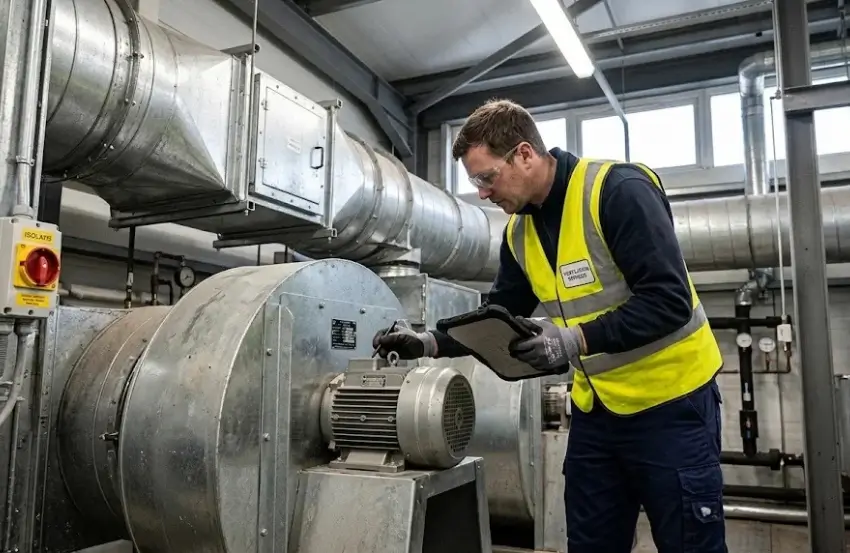
The distinction matters because an extraction system may include equipment within the restaurant, ductwork passing through the building and fans mounted on a roof or external wall.
At Extractor Experts, commercial kitchen extraction maintenance, fault finding and repair services can help property owners and restaurant operators understand the technical condition of their systems. Responsibility for arranging or paying for work should be established through the relevant lease documents and, where necessary, professional legal advice.
Why Do Landlord and Tenant Responsibilities Matter for Restaurant Extraction?
Commercial kitchen extraction systems serve an important purpose in managing cooking fumes, heat, airborne grease and ventilation conditions. When a restaurant operates from leased premises, the equipment may form part of the landlord’s building or the tenant’s own kitchen installation.
This creates questions about who should arrange inspections, authorise repairs, maintain ductwork and pay for replacement equipment.
A restaurant operator might assume that a roof-mounted extraction fan belongs to the landlord because it is attached to the building. Conversely, a landlord might assume that all equipment used by the restaurant is the tenant’s responsibility.
Neither assumption is sufficient without examining the relevant documents.
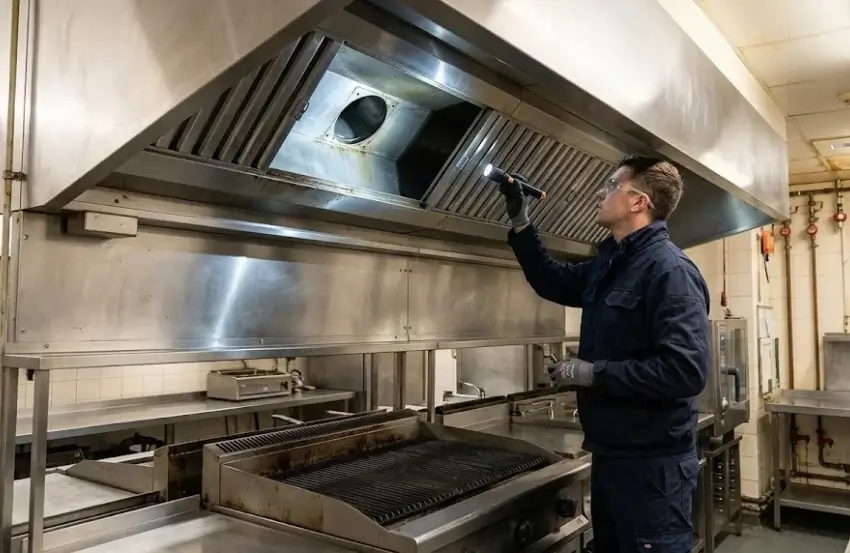
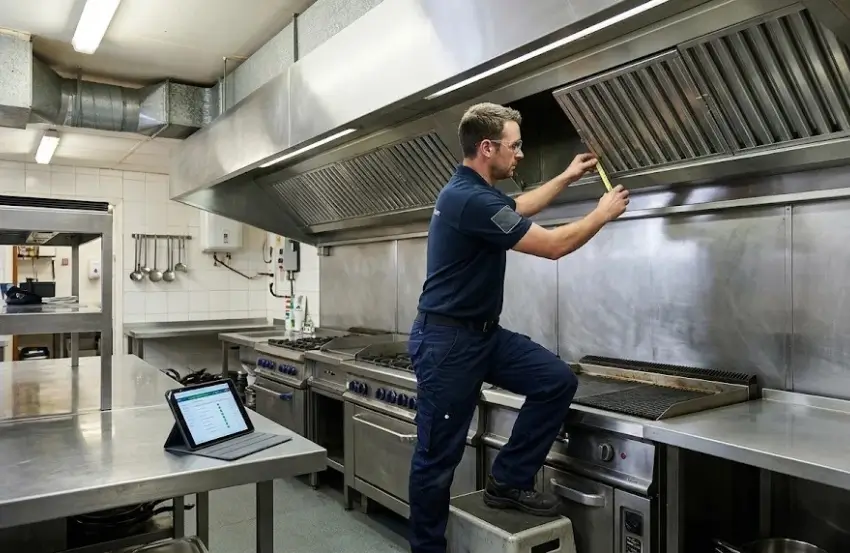
A commercial extraction installation may consist of kitchen canopies, filters, ductwork, extraction fans, controls, access panels and associated ventilation equipment. Different components can have different maintenance arrangements.
For example, a tenant might be required to maintain the canopy and internal ductwork while the landlord retains obligations for specified communal plant. Alternatively, a lease could place broader responsibility for the entire system on the tenant.
Clear allocation of responsibilities helps prevent delayed repairs, disagreements over costs and uncertainty when equipment fails.
The UK government’s guidance on renting business property and tenant responsibilities explains that commercial property repair and maintenance responsibilities largely depend on the lease, alongside applicable legal duties.
What Does the Commercial Lease Say About Kitchen Extraction Maintenance?
The lease is usually the starting point for determining commercial kitchen extraction landlord responsibilities and restaurant ventilation tenant responsibilities.
However, relevant obligations may be spread across several clauses rather than appearing under a heading specifically referring to kitchen extraction.
Repairing and Maintenance Clauses
A repairing covenant describes the work a party agrees to undertake or fund during the tenancy.
Some leases require tenants to maintain only certain internal fixtures and equipment. Others contain broader repairing obligations covering installations within the demised premises.
The exact wording matters.
A clause requiring equipment to be kept in repair may have different implications from one requiring equipment to be replaced, renewed or maintained under a particular servicing programme.
The RICS Code for Leasing Business Premises encourages appropriate repairing obligations that reflect factors such as the lease term, property condition and commercial arrangements.
Equipment Ownership and Installation History
Ownership of the extraction equipment can help clarify responsibility, although ownership alone does not necessarily determine who must maintain it.
Questions worth investigating include:
-
Was the extraction system installed before the tenant occupied the restaurant?
-
Did the landlord supply the equipment as part of the premises?
-
Did the tenant purchase and install additional extraction components?
-
Is the equipment listed in an inventory or schedule attached to the lease?
-
Were modifications authorised through a licence for alterations?
-
Are there handover documents, warranties or maintenance records?
These details can help establish the equipment’s history and identify which documents require closer examination.
Service Charges and Shared Building Services
Some commercial properties contain shared ventilation infrastructure serving multiple restaurant units.
The landlord or managing agent may arrange maintenance of certain shared systems, with costs recovered through service charges where the lease permits.
However, a landlord arranging maintenance does not necessarily mean the landlord ultimately bears the expense.
Restaurant tenants should examine whether the service charge provisions include ventilation plant, shared ductwork, roof-mounted equipment or associated building services.
Any proposed cost allocation should be checked against the lease and relevant supporting documentation.
What Kitchen Extraction Responsibilities Might Belong to the Landlord?
Landlord responsibilities for kitchen extraction systems vary according to the lease, the building configuration and the contractual arrangements.
In some properties, the landlord may retain responsibility for designated shared infrastructure, building fabric or equipment serving multiple commercial units.
For example, a landlord might arrange maintenance of a central extraction system serving several restaurants, particularly where individual tenants cannot independently access or control that equipment.
Other possible landlord-managed elements include certain roof structures, shared service routes or plant rooms.
However, these are examples of arrangements that may exist, not universal landlord obligations.
Extraction Equipment Located Outside the Restaurant
External equipment can create additional uncertainty.
An extraction fan mounted on a roof may be connected exclusively to one restaurant but positioned in an area controlled by the landlord.
The tenant may need permission to access the roof, while responsibility for servicing the fan could be assigned separately.
Before maintenance or repairs begin, the parties should establish who controls access, who is authorised to instruct contractors and who is responsible for the costs.
Building Alterations and Replacement Equipment
Major extraction upgrades may affect the building’s structure, external appearance, roof penetrations or shared services.
Even where a tenant is responsible for the equipment, the lease may require landlord consent before substantial alterations take place.
Planning permission or other approvals may also need consideration depending on the proposed works.
The RICS leasing guidance recognises the importance of addressing alterations and fit-out restrictions within commercial lease negotiations.
For projects involving new ductwork or modified discharge arrangements, professional technical assessment can help identify the proposed installation requirements before either party commits to the work.
What Kitchen Extraction Responsibilities Might Belong to the Restaurant Tenant?
Restaurant ventilation tenant responsibilities often concern the equipment used in everyday catering operations, although the exact contractual allocation must still be checked.
A tenant operating the restaurant may be expected to organise routine equipment servicing, maintain accessible components and report faults promptly.
Where the lease places maintenance responsibility on the tenant, the tenant may also need to arrange specialist inspections, repairs or replacement work.
Routine Servicing and Planned Maintenance
Commercial extraction systems require attention to remain effective during operation.
Maintenance requirements can vary depending on equipment design, cooking activity, operating hours, manufacturer instructions and the system’s condition.
Restaurant operators should establish an appropriate maintenance programme rather than assuming that every system needs identical servicing intervals.
The Health and Safety Executive’s guidance on ventilation in catering kitchens explains the importance of effective kitchen ventilation and maintaining equipment in accordance with relevant instructions.
Where the tenant is responsible for arranging servicing, keeping maintenance records can demonstrate what work has been undertaken and help identify developing problems.
For further information, see commercial kitchen extraction maintenance services.
Reporting Extraction Faults
A restaurant operator may be the first person to notice declining extraction performance.
Common warning signs include reduced airflow, unusual fan noise, excessive vibration, persistent cooking fumes or equipment that repeatedly stops operating.
These symptoms should be reported through the agreed property management process.
Even where the landlord is contractually responsible for repairs, the tenant should not assume that the landlord already knows about a developing fault.
Early reporting can help avoid prolonged disruption and provide a clear record of when the problem was identified.
Tenant-Installed Extraction Equipment
A tenant may install a new canopy, extraction fan or ductwork system as part of a restaurant fit-out.
The relevant lease, licence for alterations and other agreements should explain the conditions applying to that installation.
These may address maintenance, access, reinstatement and what happens to the equipment when the tenancy ends.
Restaurant operators should retain installation documentation and written approvals because these records can become important when future repairs or lease-end obligations are discussed.
Who Pays for Commercial Kitchen Extraction Repairs or Replacement?
Payment responsibility should be established by examining the relevant contractual provisions and the circumstances surrounding the fault.
A minor repair to a tenant-maintained fan may be treated differently from the replacement of shared building equipment.
Likewise, a system installed by a previous tenant may create questions about whether the current tenant accepted maintenance or replacement obligations when taking the lease.
The following table illustrates issues to investigate rather than assigning automatic legal responsibility.
| Extraction issue | Responsibility questions to check |
|---|---|
| Canopy requires servicing | Who maintains equipment within the restaurant? |
| Extractor fan motor fails | Who has repairing and replacement obligations for the fan? |
| Shared ductwork requires attention | Is the ductwork included in landlord-managed services? |
| Roof-mounted fan needs replacement | Who maintains the fan, and who controls roof access? |
| Tenant wants to upgrade extraction | Is landlord consent or another approval required? |
| Existing system performs poorly | What does the lease say about condition, repairs and improvements? |
| Equipment requires work before lease expiry | What do the repairing, reinstatement and dilapidations provisions require? |
A contractor can assess the technical problem and provide repair or replacement options. That assessment does not, by itself, determine which party is legally responsible for paying.
Where responsibility is disputed, the landlord and tenant should seek appropriate commercial property advice before agreeing how costs will be allocated.
What Happens When Kitchen Extraction Equipment Is Shared Between Tenants?
Shared extraction systems can be more complicated than equipment serving a single restaurant.
In a multi-unit commercial building, several kitchens may connect to common ventilation infrastructure, or different units may depend on equipment located in shared service areas.
The maintenance arrangements should identify who controls the system, who arranges inspections, how access is coordinated and how costs are allocated.
For example, maintenance of a shared fan could require cooperation between the managing agent and several restaurant operators.
A fault affecting one unit may also require investigation of the wider system before the cause can be established.
Individual tenants should avoid making unauthorised changes to shared ductwork, fans or controls. Such changes may affect ventilation performance in other premises.
Where shared equipment is involved, a coordinated technical inspection can help establish the system layout, identify the affected components and support discussions about the necessary work.
The contractual and legal allocation of responsibility remains a separate matter.
How Do UK Health and Safety Duties Affect Restaurant Extraction Maintenance?
Lease responsibilities and workplace health and safety duties are related but are not identical.
A commercial lease may allocate the cost of maintenance to one party, while applicable health and safety law may impose duties on employers or other persons with control of the workplace.
The Workplace (Health, Safety and Welfare) Regulations 1992 address maintenance and ventilation requirements in workplaces. Regulation 5 covers the maintenance of relevant equipment and systems, including mechanical ventilation systems provided under Regulation 6.
The application of particular duties depends on the circumstances, including the degree of control exercised by the relevant parties.
Restaurant operators should therefore avoid assuming that a contractual disagreement removes the need to address an unsafe ventilation condition.
Similarly, landlords should consider any applicable duties associated with areas or systems under their control.
The HSE also advises catering businesses to coordinate safe working arrangements with other relevant parties, including landlords, maintenance personnel and catering engineers.
Where an extraction defect creates a potential health or safety risk, the appropriate immediate response should be determined through a suitable risk assessment and competent professional advice.
Is Routine Maintenance the Same as Grease Duct Cleaning?
Not necessarily.
Mechanical servicing, ventilation performance assessment and grease extract duct cleaning can involve different tasks, contractors and contractual responsibilities.
A maintenance visit might address fan condition, vibration, controls or airflow performance. Grease cleaning focuses on removing deposits from relevant extraction components.
A restaurant’s maintenance arrangements should clearly identify which activities are included, which are separately contracted and who is responsible for each.
The frequency and scope of cleaning or servicing should be determined from the system’s use, condition, risk assessment and applicable guidance rather than a single universal schedule.
How Can Landlords and Tenants Agree a Kitchen Extraction Maintenance Plan?
A written maintenance arrangement can reduce uncertainty and help both parties understand what is expected.
It does not replace the lease, but it can provide a practical record of how agreed responsibilities will be managed.
Step 1: Identify the Extraction System Components
Start by identifying the canopy, fans, ductwork, controls and other relevant ventilation equipment.
Record where each component is located and whether it serves one restaurant or several premises.
Existing installation drawings and service records may assist with this process.
Step 2: Review the Lease and Supporting Documents
Examine the repairing covenants, equipment schedules, service charge provisions, alterations agreements and access rights.
Where the wording is unclear, obtain advice from a solicitor experienced in commercial property leases.
Do not rely solely on informal assumptions about which party normally pays.
Step 3: Establish the System’s Condition
A technical inspection can help identify existing faults, servicing requirements and potential replacement needs.
This is particularly useful before a new tenancy begins or when a restaurant is considering significant kitchen alterations.
A professional assessment can distinguish maintenance issues from equipment defects or wider ventilation design problems.
Step 4: Agree Who Arranges and Authorises Work
The parties should clarify who contacts contractors, who approves quotations, how access is arranged and who receives maintenance reports.
Payment responsibility should also be recorded in accordance with the lease and any agreed variations.
Step 5: Maintain Records and Review the Arrangement
Keep inspection reports, maintenance records, repair quotations, completion documents and relevant correspondence.
Review the arrangements when the kitchen layout changes, equipment is replaced or the lease is renewed.
Clear records can make future decisions easier, particularly when different landlords, tenants or managing agents become involved.
What Should Be Checked Before Signing a Restaurant Lease?
Prospective restaurant tenants should investigate the kitchen extraction system before committing to a lease.
An existing canopy does not necessarily mean the ventilation system is suitable for the proposed cooking operation.
Different menus, appliances and cooking volumes can create different extraction requirements.
Before signing, a prospective tenant should seek clarity about the equipment included with the premises, its condition, servicing history and any outstanding defects.
It is also worth checking whether external fans or ductwork require special access arrangements and whether proposed alterations need landlord approval.
Where available, request installation drawings, maintenance reports and relevant documentation concerning the extraction system.
A condition survey or specialist ventilation assessment may help identify potential expenditure before lease terms are finalised.
This information can support discussions about repairing obligations, initial works and responsibility for future upgrades.
For new restaurant fit-outs, commercial kitchen ventilation design may also be relevant when assessing whether the proposed cooking arrangements can be supported by the existing system.
What Happens to Kitchen Extraction Responsibilities at the End of a Lease?
The end of a commercial tenancy can raise further questions about extraction equipment.
Depending on the lease and associated agreements, a tenant may be required to address outstanding repairs, remove certain alterations or reinstate parts of the premises.
These obligations are sometimes considered as part of a dilapidations assessment.
However, the fact that a tenant installed extraction equipment does not automatically mean it must be removed at the end of the lease.
The relevant contractual wording, permissions and circumstances must be reviewed.
Landlords and tenants should identify any outstanding extraction maintenance or repair issues before the tenancy ends.
A documented inspection can help establish the condition of the system and provide technical evidence for discussions about required work.
Where there is disagreement over reinstatement or repair obligations, specialist property advice is appropriate.
How Can Extractor Experts Help With Kitchen Extraction Maintenance?
Extractor Experts provides commercial kitchen extraction and ventilation services for restaurants and other commercial premises, including maintenance, fault finding, repairs and system assessments.
For landlords, managing agents and restaurant operators, a technical assessment can help identify the condition of extraction equipment and the work needed to address operational problems.
Depending on the system and the issue identified, relevant services may include extraction fan fault finding, maintenance inspections, repair recommendations, ductwork assessment and ventilation improvements.
These services can provide useful technical information when parties are discussing maintenance arrangements or planning works.
However, a contractor’s findings should not be treated as a legal interpretation of a commercial lease.
For technical problems, see commercial kitchen extraction repairs or commercial kitchen extraction systems.
Frequently Asked Questions
1. Is the landlord responsible for kitchen extraction in a leased restaurant?
Not automatically. The landlord’s responsibilities depend on the commercial lease, associated agreements and applicable legal duties. Some landlords maintain specified shared or building-related ventilation equipment, while other leases allocate extensive maintenance obligations to tenants. The documents and circumstances must be reviewed.
2. Does a restaurant tenant have to maintain the extractor fan?
A tenant may be responsible for extractor fan maintenance where the lease assigns that obligation to them. Separately, restaurant operators must consider applicable workplace safety duties. The fan’s location or ownership alone does not conclusively determine who must pay for servicing or repairs.
3. Who pays when a restaurant extraction system needs replacing?
Replacement costs depend on the lease terms, the equipment concerned and the circumstances requiring replacement. Repairing obligations, renewal provisions, service charge arrangements and alterations agreements may all be relevant. A technical assessment can establish what needs replacing, but legal responsibility should be determined separately.
4. Can a restaurant tenant modify the extraction system without landlord permission?
Not necessarily. A lease may require landlord consent for alterations, particularly where changes affect external ductwork, roofs, building services or shared equipment. Other approvals may also apply. Tenants should check the lease and obtain any necessary permissions before commissioning modifications.
5. What should happen if the landlord and tenant disagree about extraction repairs?
Both parties should review the lease, relevant correspondence, maintenance records and available technical evidence. A competent extraction contractor can investigate the fault and recommend suitable work. Where contractual responsibility remains disputed, advice from a commercial property solicitor may be needed. Potentially unsafe conditions should be addressed promptly through appropriate risk management.
Conclusion: Establish Responsibilities Before Extraction Problems Escalate
Understanding restaurant extraction landlord tenant responsibilities requires more than identifying who owns the equipment or where it is installed.
The commercial lease, equipment history, repairing obligations, access arrangements and applicable health and safety duties all need consideration.
Clear maintenance arrangements can help landlords and restaurant tenants organise inspections, authorise repairs and reduce uncertainty about future work.
Where technical problems exist, a professional assessment can provide information about the condition of the system and the maintenance or repairs required.
Need a Commercial Kitchen Extraction Assessment?
Extractor Experts supports commercial kitchen operators, landlords and property managers with extraction maintenance, fault finding, repairs and ventilation-related enquiries across London, Surrey and other locations subject to service availability.
Contact Extractor Experts to discuss the technical requirements of your restaurant extraction system.