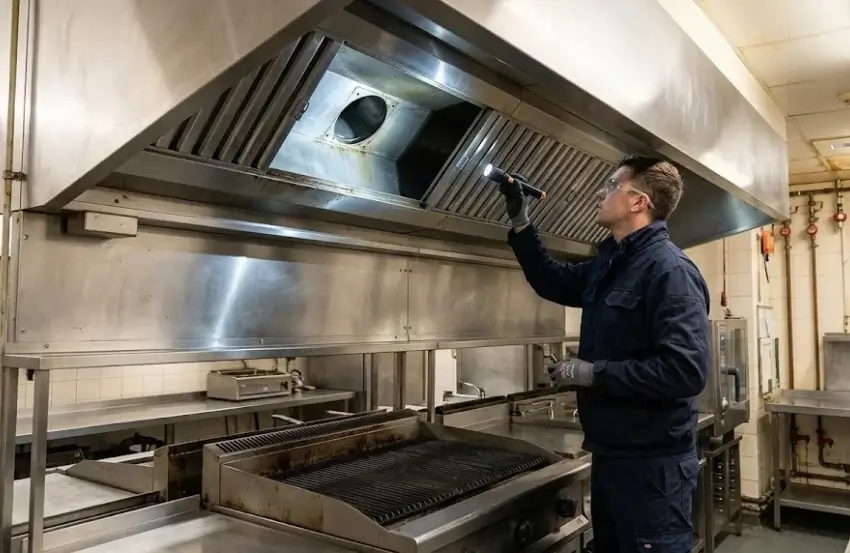
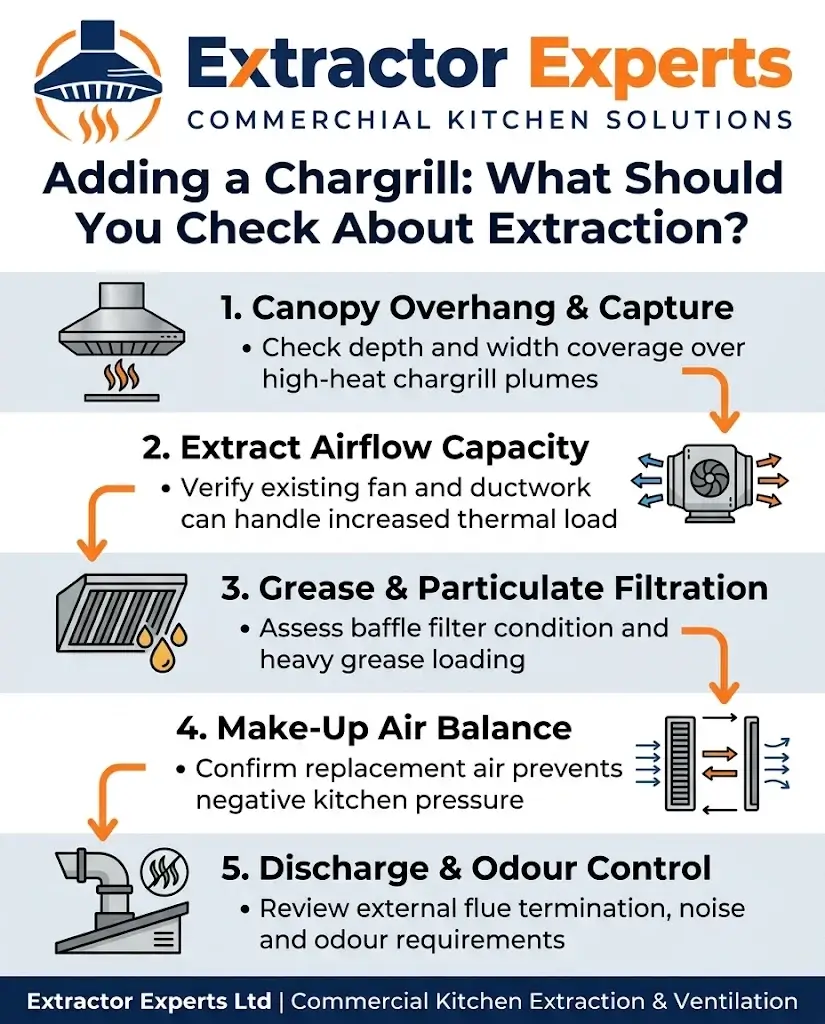
Adding a chargrill to an existing commercial kitchen can increase smoke, grease-laden vapour, heat and odours beyond what the current ventilation system was designed to handle. Before installing the appliance, operators should check whether their existing canopy, extractor fan, ductwork and replacement-air supply can manage the additional cooking load.
Commercial kitchen extraction for chargrills needs particular attention because grilling food directly over intense heat can generate a concentrated cooking plume. A system that works adequately for ovens, griddles or fryers may struggle when a chargrill is introduced, especially during busy service periods.
The type of chargrill also matters. Gas and electric models have different considerations from charcoal or wood-fired equipment, which introduce additional combustion and carbon monoxide risks.
The safest approach is to assess the complete extraction system before changing the cooking line, rather than assuming that an existing canopy has spare capacity.
At Extractor Experts, we provide commercial kitchen extraction design, installation, repairs and maintenance services across London, Surrey and surrounding service areas. Understanding how new cooking equipment affects ventilation is an important part of planning a practical kitchen upgrade.
How Does Adding a Chargrill Change Kitchen Extraction Requirements?
A chargrill changes the operating conditions of a commercial kitchen, even when it occupies only a small section of the cooking line.
Unlike some enclosed cooking equipment, chargrills expose food directly to intense heat. Fat and cooking juices can fall onto hot surfaces, producing smoke and airborne grease particles. The resulting plume rises towards the extraction canopy, carrying heat, odours and other cooking emissions.
The existing extraction system may have been designed around a different combination of appliances. Replacing a low-emission unit with a chargrill can therefore create additional ventilation demand without increasing the physical size of the kitchen.
Increased smoke and grease production
Grilling fatty meats or preparing large quantities of food can generate substantial smoke and grease-laden vapour.
If the canopy cannot capture these emissions effectively, smoke may escape into preparation areas, staff working zones or adjoining spaces.
Additional grease loading can also affect filters and ductwork, potentially requiring changes to cleaning and inspection arrangements.
Higher heat loads during cooking
Chargrills can release considerable heat into the surrounding kitchen.
This additional heat affects working conditions and may change the amount of air that needs to be extracted.
A kitchen that previously maintained comfortable temperatures may become noticeably hotter after a chargrill is installed, particularly when several appliances operate simultaneously.
Changes to the cooking plume
The position, dimensions and operating intensity of the new chargrill influence how cooking emissions rise.
A canopy designed for the original equipment arrangement may not provide sufficient coverage when a new appliance is positioned near its edge.
For that reason, assessing the cooking plume is just as important as checking the extractor fan’s rated capacity.
Can Your Existing Extraction System Handle a New Chargrill?
An existing commercial kitchen extraction system may accommodate a chargrill, but this should be established through a technical assessment.
The fact that a canopy is already installed does not mean it has sufficient spare extraction capacity.
The assessment should consider the equipment currently connected to the system, the proposed chargrill, actual operating airflow and the condition of the ventilation components.
| Existing component | What needs checking | Potential concern |
|---|---|---|
| Extraction canopy | Size, positioning and coverage | Smoke escaping beyond the canopy |
| Extractor fan | Available airflow and operating condition | Insufficient extraction during busy periods |
| Ductwork | Dimensions, resistance, condition and access | Restricted airflow or grease accumulation |
| Grease filters | Suitability and accessibility | Increased grease loading |
| Replacement air | Air supply and distribution | Excessive negative pressure |
| Discharge arrangement | Location and suitability | Smoke or odour affecting neighbouring premises |
| Controls | Fan operation and safety interlocks | Unsafe operation during ventilation failure |
These checks help determine whether the existing arrangement can remain in service, requires modification or needs a more substantial upgrade.
Check the current airflow performance
The starting point is to establish how the existing extraction system performs.
A competent ventilation specialist may measure airflow, assess fan operation and investigate restrictions within the system.
The results can then be compared with the requirements of the revised cooking equipment arrangement.
This is more reliable than judging extraction performance solely by the amount of noise produced by the fan or whether smoke appears to disappear during light cooking.
Consider simultaneous appliance operation
A chargrill may operate alongside fryers, ovens, griddles and other equipment.
During peak service, several appliances can produce heat and cooking emissions at the same time.
The extraction assessment should reflect realistic operating conditions rather than assuming that only one appliance will be used.
Where the original ventilation design does not account for the additional load, changes to airflow, canopy coverage or system components may be necessary.
Does a Chargrill Need a Different Extraction Canopy?
Not every chargrill requires a completely separate canopy. The correct arrangement depends on the appliance, its fuel source, the existing extraction design and applicable safety guidance.
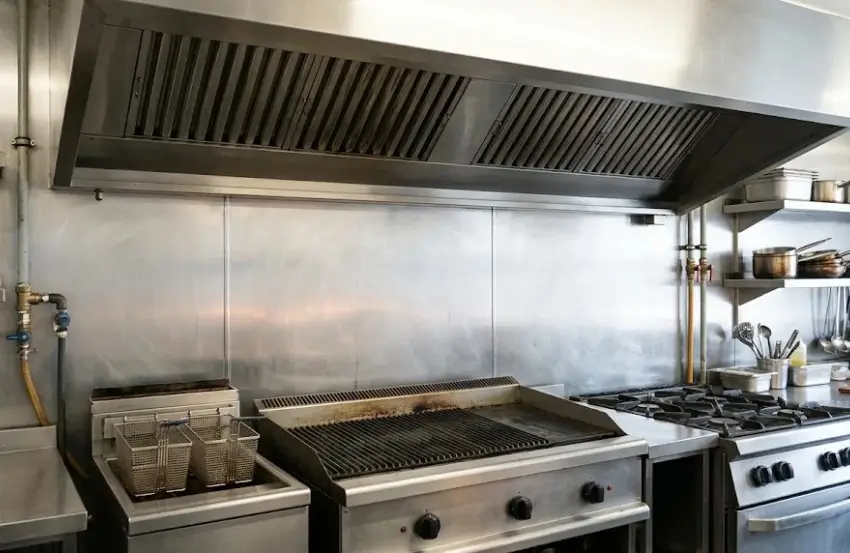
A gas or electric chargrill may be suitable beneath an existing commercial kitchen canopy if the system can provide appropriate capture and extraction.
However, a canopy that previously served lower-emission cooking equipment may need to be extended, repositioned or replaced.
Canopy coverage and positioning
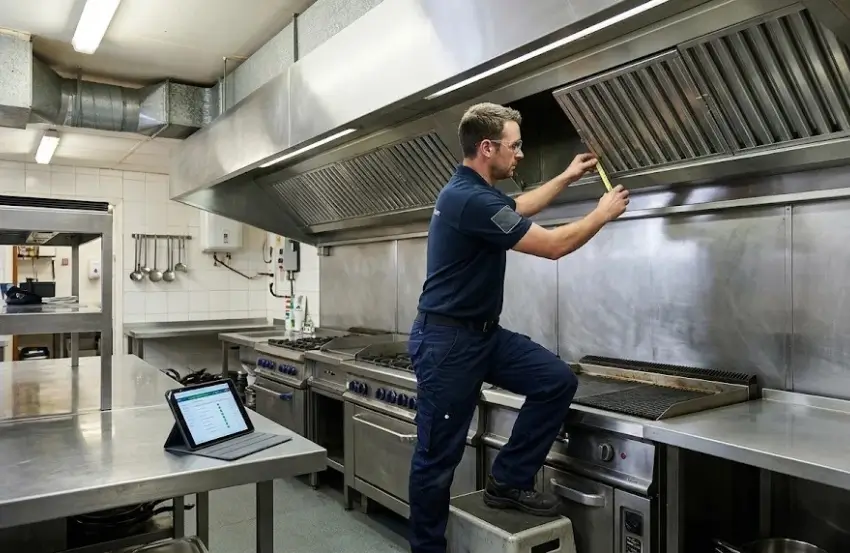
The canopy must be positioned to capture the plume produced by the chargrill under normal operating conditions.
Its dimensions, mounting height and relationship to neighbouring appliances all influence performance.
A chargrill positioned at the end of a cooking line may create a particular challenge if smoke escapes beyond the canopy edge.
Nearby doors, supply-air outlets and staff movement can also disturb the rising plume.
A professional assessment can establish whether the existing canopy arrangement is suitable or whether alterations would improve capture.
Grease filtration and accessibility
Chargrill cooking can increase the amount of grease entering the extraction system.
Grease filters therefore need to be appropriate for the cooking process and accessible for routine removal and cleaning.
It is also important to consider whether the ductwork has suitable inspection and cleaning access.
Adding more intensive cooking equipment without reviewing these arrangements can create maintenance difficulties later.
For kitchens considering canopy modifications, Extractor Experts provides commercial kitchen canopy services.
What Are the Commercial Chargrill Ventilation Requirements?
Commercial chargrill ventilation requirements depend on the type of equipment, the cooking process and the building’s existing ventilation arrangements.
UK guidance from the Health and Safety Executive explains that commercial kitchens need adequate ventilation to remove heat, fumes and vapours and provide a safe working environment.
The HSE also highlights the importance of suitable replacement air, particularly where combustion appliances are installed.
Gas and electric chargrills
Gas and electric chargrills both generate cooking emissions that need effective capture.
Gas-fired equipment also produces combustion products and requires suitable combustion air and relevant gas safety arrangements.
An electric chargrill avoids on-site fuel combustion but can still generate substantial smoke, heat and grease-laden vapour during cooking.
Neither appliance type should be assumed compatible with an existing extraction system without checking its operating requirements.
Charcoal and solid-fuel chargrills
Charcoal and wood-fired equipment introduce additional safety considerations.
Solid-fuel combustion can produce carbon monoxide, a toxic gas that may accumulate when ventilation is inadequate or fails.
The HSE’s CAIS26 guidance specifically addresses carbon monoxide risks associated with charcoal grills and other solid-fuel catering appliances.
It recommends competent technical advice when assessing installation, ventilation, extraction and maintenance arrangements.
A charcoal-fired appliance does not automatically require a separate extraction system in every installation, but its suitability for a shared system must be properly assessed. Wood-fired equipment can require a dedicated arrangement under applicable design guidance.
The relevant fuel-specific requirements, appliance manufacturer’s instructions and building conditions must be reviewed before installation.
Important: Never assume that an ordinary gas or electric chargrill can be converted to solid fuel. Use only equipment specifically designed and approved for its intended fuel and indoor application.
Why Is Replacement Air Important When Adding a Chargrill?
Extraction removes air from the kitchen. That air must be replaced in a controlled way to maintain appropriate ventilation and pressure conditions.
When a chargrill increases the required extraction airflow, the existing replacement-air arrangement may no longer be adequate.
Insufficient replacement air can affect the operation of extraction fans and other ventilation components.
It can also create uncomfortable draughts, make doors difficult to open and interfere with the safe operation of combustion appliances.
Avoid excessive negative pressure
A commercial kitchen commonly operates at a controlled pressure relative to adjoining areas.
However, excessive negative pressure can cause problems, particularly where naturally flued combustion equipment is present.
In some circumstances, unsuitable pressure conditions can contribute to combustion products being drawn back into occupied spaces.
The HSE specifically warns about this risk when natural-draught solid-fuel appliances operate alongside mechanical extraction systems.
Check supply-air distribution
Providing additional air is not simply a matter of increasing airflow through a nearby grille.
The position and velocity of incoming air can affect how effectively the canopy captures cooking emissions.
Poorly positioned supply air may disturb the chargrill’s cooking plume, allowing smoke to escape into the kitchen.
The ventilation assessment should therefore consider both extract and supply-air arrangements.
Where the cooking line has changed significantly, a review of the complete commercial kitchen ventilation design may be appropriate.
What Should You Check About Existing Ductwork and Extractor Fans?
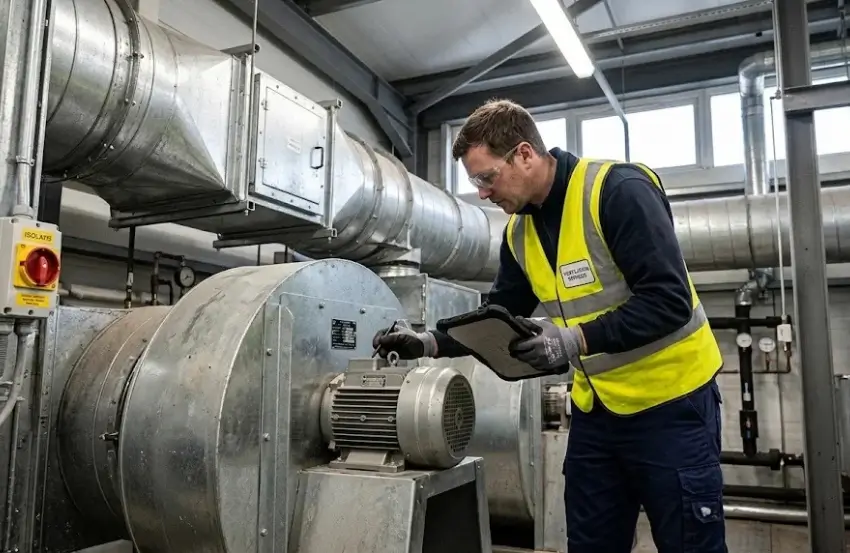
The extractor fan and ductwork form an interconnected system.
Increasing fan speed or fitting a larger fan does not necessarily resolve insufficient extraction if the ductwork, filters or other components cannot support the required airflow.
Extractor fan capacity
The fan should be assessed against the airflow and resistance of the revised system.
A fan operating near its existing performance limits may have little spare capacity for additional cooking equipment.
The condition of the motor, drive components and controls should also be considered.
If airflow is inadequate, the solution may involve adjustments, repairs or replacement, depending on the assessment findings.
Ductwork condition and suitability
Existing ductwork should be checked for restrictions, grease accumulation, damage and suitable access.
The duct route and construction may also affect whether the system can accommodate increased airflow or a different type of cooking equipment.
For solid-fuel appliances, additional attention is needed because of combustion temperatures, potential corrosive products and fire-safety requirements.
A duct system suitable for one cooking process should not automatically be treated as suitable for another.
Extraction discharge and odour control
Chargrilling can produce noticeable cooking odours that may affect neighbouring premises.
Where a restaurant is located beneath residential accommodation or close to other occupied buildings, the discharge arrangement deserves particular attention.
An increase in cooking emissions may justify reviewing discharge location, filtration and any relevant planning conditions.
This does not mean every chargrill installation requires new odour-control equipment. The need should be established from the proposed cooking activity, existing system and local circumstances.
How Does Adding a Chargrill Affect Fire Safety and Maintenance?
Introducing a chargrill can change the kitchen’s fire-risk profile.
The combination of high cooking temperatures, grease-laden emissions and potentially increased deposits within the extraction system makes maintenance planning particularly important.
Operators should review their fire risk assessment when the cooking process changes and consider whether existing cleaning and inspection arrangements remain appropriate.
Review grease accumulation risks
Grease can collect in filters, ductwork and other accessible extraction components.
Where cooking intensity increases, the rate of accumulation may also change.
A cleaning schedule established for the previous equipment arrangement may therefore need to be reconsidered.
Cleaning frequency should reflect the actual cooking activity, system condition, grease loading and relevant professional guidance.
Check access for inspection and cleaning
Extraction systems should provide appropriate access for inspection and cleaning.
When a canopy is modified or ductwork is extended, maintaining access is important.
Poorly accessible sections can make it difficult to identify or remove accumulated grease.
Any proposed modification should consider long-term maintenance requirements rather than only the immediate installation.
Update fire-safety procedures
A change in cooking equipment may require a review of fire suppression arrangements, staff training, emergency procedures and operating instructions.
Solid-fuel equipment needs particular care because burning fuel can continue producing hazardous combustion products after cooking has stopped.
London Fire Brigade advises keeping extraction operating until coals or wood are fully extinguished and cold.
For commercial kitchens using solid-fuel appliances, the HSE also specifies thorough examination and testing of extraction systems at least once every 14 months, alongside appropriate cleaning and maintenance. This should not be confused with a universal cleaning interval for all kitchen extraction systems.
Extractor Experts’ commercial kitchen extraction maintenance services can be considered when reviewing an existing system’s maintenance needs.
When Should You Upgrade the Extraction System Before Installing a Chargrill?
A complete extraction replacement is not always necessary when adding a chargrill.
Some kitchens may have suitable existing infrastructure that can accommodate the new appliance with limited modifications.
Others may need a larger canopy, changes to airflow, additional replacement air, fan upgrades or alterations to ductwork.
The appropriate solution depends on the measured performance and suitability of the existing installation.
Common findings and possible actions
| Assessment Finding | Possible Action |
|---|---|
| Smoke escaping from canopy | Review canopy coverage, airflow and supply-air interference |
| Insufficient extract airflow | Assess fan performance, duct resistance and system capacity |
| Increased kitchen heat | Review ventilation loads and replacement-air arrangements |
| Grease accumulation | Assess filtration, cleaning frequency and duct access |
| Charcoal or wood-fuel installation | Obtain specialist fuel-specific safety and ventilation assessment |
| Odour complaints or concerns | Review discharge arrangements and appropriate odour control |
It is generally better to identify these issues before purchasing or positioning the new chargrill.
Changing the equipment layout after installation can create unnecessary disruption and additional work.
How Should You Plan Chargrill Extraction System Design?
Effective chargrill extraction system design begins with understanding the proposed cooking operation and the existing ventilation system.
A practical assessment follows several stages.
1. Identify the proposed appliance
Record the chargrill’s make, model, dimensions, fuel type and manufacturer’s ventilation instructions.
Establish how intensively the equipment will be used and whether it will operate alongside other appliances.
2. Review the existing cooking line
Examine the position of the proposed chargrill relative to the canopy, neighbouring cooking equipment and kitchen circulation routes.
Identify changes that could affect plume capture or staff working conditions.
3. Assess the extraction system
Review canopy coverage, actual airflow, fan performance, ductwork condition, filtration and discharge arrangements.
Determine whether the system can accommodate the revised cooking load.
4. Assess replacement air and safety requirements
Check that replacement air is sufficient and appropriately distributed.
For gas or solid-fuel equipment, involve suitably competent specialists to review the relevant combustion and safety requirements.
5. Agree necessary modifications
Where changes are needed, establish the proposed scope before installation.
This may include canopy alterations, airflow adjustments, ductwork modifications, fan changes or other ventilation improvements.
6. Test the completed arrangement
After approved modifications are completed, the system should be commissioned and its performance checked under representative operating conditions.
The results should be documented, and relevant operating and maintenance instructions updated.
This process helps ensure that the new chargrill is considered as part of the entire commercial kitchen ventilation system rather than as an isolated piece of cooking equipment.
What UK Guidance Applies to Chargrill Extraction?
Commercial kitchen operators should consider applicable legislation, equipment instructions and recognised industry guidance.
The precise requirements depend on the appliance, fuel source, building and installation circumstances.
HSE CAIS10 provides guidance on ventilation in catering establishments, including the responsibilities associated with installing new equipment.
HSE CAIS26 addresses carbon monoxide risks from solid-fuel cooking appliances.
BESA DW/172 is a recognised industry specification for commercial kitchen ventilation design, installation and maintenance. Its provisions include specific considerations for solid-fuel equipment.
These documents serve different purposes. Industry design specifications should not automatically be described as legislation, and compliance with one document does not remove other legal or safety responsibilities.
Before introducing a chargrill, operators should also review applicable planning conditions, building requirements, fire risk assessments and the manufacturer’s installation instructions.
Where the installation involves gas appliances, gas work must be undertaken by appropriately qualified and registered personnel.
Frequently Asked Questions
1. Can I use my existing extraction system for a new chargrill?
Possibly. The existing system must have suitable canopy coverage, airflow, ductwork and replacement-air arrangements for the additional cooking load. A professional assessment should establish whether modifications are needed before the chargrill is installed.
2. Does a commercial chargrill need a separate extraction canopy?
Not always. Gas and electric chargrills may be suitable beneath an existing canopy if the installation is properly designed. Solid-fuel equipment requires additional assessment, and certain wood-fired installations need dedicated extraction arrangements.
3. Does adding a chargrill increase grease in extraction ductwork?
It can. Chargrilling fatty foods can generate grease-laden vapour that enters the extraction system. The resulting grease loading depends on cooking intensity, filtration and system design, so cleaning and inspection schedules may need reviewing.
4. Can a larger extractor fan solve chargrill ventilation problems?
Not necessarily. A larger fan may not resolve poor canopy coverage, restricted ductwork or insufficient replacement air. The complete ventilation system should be assessed before changing fan capacity.
5. Should extraction be checked before buying a commercial chargrill?
Yes. Checking extraction capacity, canopy positioning, fuel-specific requirements and replacement air before purchasing the appliance can help identify installation constraints and avoid unnecessary changes after equipment delivery.
Conclusion: Check Extraction Before Adding a Chargrill
Adding a chargrill can be a useful way to expand a restaurant’s menu, but it also changes the demands placed on the existing commercial kitchen ventilation system.
Increased smoke, heat, grease and odours can expose limitations in canopy coverage, fan capacity, ductwork and replacement-air supply.
The type of chargrill is particularly important. Gas and electric equipment require appropriate cooking-emission extraction, while charcoal and wood-fired appliances introduce additional combustion and safety considerations.
Before introducing a chargrill, assess the complete extraction system and confirm that it is suitable for the revised cooking operation.
Need Help Assessing Your Commercial Kitchen Extraction?
Extractor Experts provides commercial kitchen extraction design, installation, fault finding, repairs and maintenance services for restaurants and other commercial catering facilities.
Whether you are planning a new chargrill installation or reviewing the performance of an existing kitchen extraction system, contact our team to discuss your requirements.
Call: +44 7576 680389
Email: info@extractorexperts.co.uk
Website: Extractor Experts Ltd