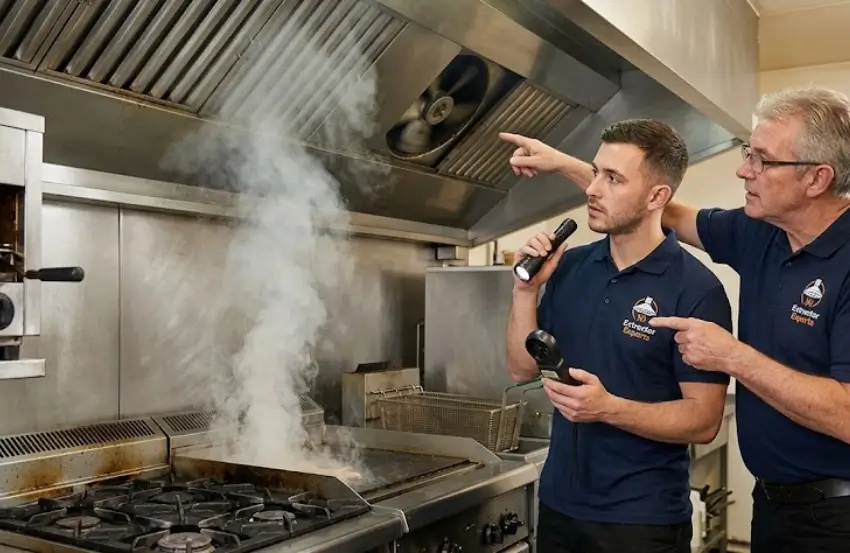
Grease dripping from commercial kitchen canopy usually indicates excessive grease accumulation, a blocked or incorrectly positioned filter, an overflowing grease collection channel, or a problem with the canopy’s drainage arrangement. In some cases, poor extraction performance, damaged joints or unsuitable ductwork connections can contribute to grease escaping from the system.
Commercial kitchen canopies are designed to capture cooking fumes, heat and airborne grease before they spread throughout the kitchen. However, grease particles can accumulate on filters, internal canopy surfaces and extraction ductwork. When these deposits become excessive or cannot drain into the intended collection points, liquid grease may drip onto cooking equipment, preparation surfaces or the floor.
Grease Dripping from commercial kitchen canopy leak should never be ignored. Accumulated grease can increase fire risk, create hygiene concerns and indicate that the extraction system requires inspection or maintenance. Extractor Experts Ltd provides commercial kitchen canopy installation, extraction system repairs, fault finding and planned ventilation maintenance across London, Greater London and Surrey. Understanding why grease is leaking, how to identify the cause and when to arrange professional assistance can help protect kitchen operations and prevent recurring problems.
What Causes Grease to Drip from a Commercial Kitchen Canopy?
Grease leaks can develop for several reasons. The exact cause depends on the canopy design, cooking activity, cleaning arrangements and extraction system condition.
1. Excessive Grease Build-Up Inside the Canopy
One of the most common reasons for grease dripping from kitchen extractor hood is the accumulation of cooking grease. Commercial cooking produces airborne oil and grease particles. The extraction canopy captures these contaminants and directs them towards grease filters. Over time, deposits can collect on internal canopy surfaces, filter housings, collection channels and nearby ductwork.
When grease accumulates beyond what the collection system can manage, it may begin dripping from the canopy. This is particularly relevant in kitchens with high levels of frying, grilling or other grease-producing cooking processes. Visible grease droplets should prompt an inspection of the canopy’s condition and cleaning arrangements.
2. Dirty or Blocked Grease Filters
Grease filters help capture grease particles before air enters the extraction ductwork. As cooking continues, grease collects on the filter surfaces. Without appropriate cleaning, filters can become heavily contaminated. This may restrict airflow and contribute to grease collecting in areas where it should not accumulate.
A dirty filter can also allow grease to run or drip from its lower edges. The correct cleaning method and frequency depend on the filter design, manufacturer’s instructions and kitchen usage. Damaged filters or filters that cannot be cleaned effectively may require replacement.
3. Blocked Grease Collection Channels
Many commercial kitchen canopies incorporate channels or collection arrangements designed to direct grease into removable containers or designated collection points. These channels can become obstructed by accumulated grease and cooking residues. When a collection channel is blocked, liquid grease may overflow or escape through another opening.
This can create persistent dripping even after the visible surfaces of the canopy have been wiped clean. The collection arrangement should be inspected to establish whether grease is flowing towards the intended collection point.
4. Incorrectly Installed or Damaged Filters
Commercial kitchen grease filters must be compatible with the canopy and fitted correctly. A filter that is misaligned, damaged or incorrectly positioned may allow grease to bypass the intended collection route. Grease can then accumulate on surfaces that are not designed to drain it effectively.
This problem may appear after filter cleaning or replacement if the filters have not been refitted correctly. A professional inspection can establish whether the filter type, positioning and retaining arrangements are suitable.
5. Damaged Canopy Joints or Connections
A commercial kitchen canopy contains joints, connections and fabricated sections that must be suitable for its operating conditions. Damage, poor workmanship or deterioration at these locations may create paths through which accumulated grease can escape. Leaks near a canopy-to-duct connection may indicate contamination above the visible canopy rather than a problem with the filters alone. In such cases, simply cleaning the external surface will not address the underlying cause. The affected sections should be inspected to identify whether cleaning, repair or modification is required.
6. Poor Extraction Airflow
Inadequate airflow can contribute to grease accumulation and poor contaminant capture. Possible causes include dirty filters, restricted ductwork, an underperforming extraction fan or insufficient replacement air. When the extraction system does not perform as designed, cooking fumes may escape the canopy and deposits may develop in unintended areas.
However, poor airflow is not always the direct cause of a grease leak. The fan, filters, canopy and ductwork should be assessed together to determine whether ventilation performance is contributing to the problem.
7. Inadequate Canopy Design or Installation
A canopy must be suitable for the cooking equipment beneath it. Its size, position, airflow arrangement and grease collection features all influence performance. An unsuitable installation may allow contaminants to escape or collect in locations where they are difficult to manage.
Problems can become more noticeable after a kitchen changes its cooking equipment or increases production. A professional assessment can determine whether the existing canopy remains appropriate for the kitchen’s operating requirements.
Is Grease Dripping from a Commercial Kitchen Canopy Dangerous?
Yes. Grease dripping from commercial kitchen canopy can create fire, hygiene and workplace safety concerns. The level of risk depends on the amount of grease, its location, the cooking equipment and the condition of the extraction system.
Increased Fire Risk
Grease deposits are combustible. When grease accumulates inside extraction canopies and ductwork, it can contribute to the spread of fire if exposed to a suitable ignition source. Cooking appliances that produce high temperatures or open flames can increase the seriousness of this risk.
The Health and Safety Executive emphasizes the importance of designing kitchen ventilation systems to enable effective cleaning and prevent excessive grease accumulation. Therefore, treat visible dripping as a warning sign that requires investigation rather than as a normal part of kitchen operation.
Food Contamination
Grease dripping onto food, preparation surfaces or utensils can create hygiene problems. Deposits inside extraction systems may contain accumulated cooking residues and other contaminants. Food affected by leaking grease should not be served, and contaminated surfaces and equipment require appropriate cleaning before use. The source of the leak should also be addressed to prevent further contamination.
Slippery Floors and Workplace Hazards
Grease falling onto the kitchen floor can create a slip hazard. Commercial kitchens are already busy environments where staff move quickly between hot equipment, preparation stations and service areas. Grease leaks can increase the likelihood of accidents if affected areas are not controlled and cleaned promptly.
Reduced Ventilation Performance
A canopy that is leaking grease may also be experiencing wider extraction problems. Heavily contaminated filters, restricted ductwork or poor airflow can reduce the system’s ability to capture cooking fumes. This may contribute to uncomfortable working conditions and additional contamination within the kitchen.
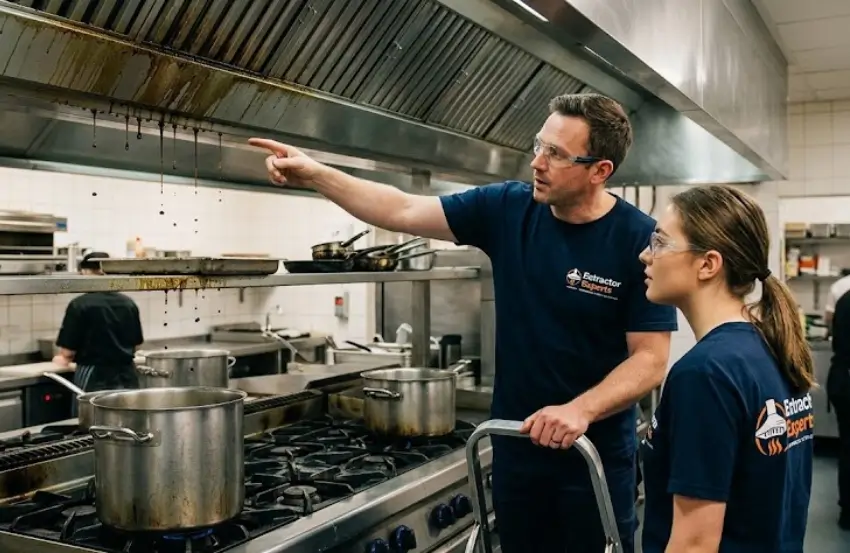
What Should You Do When Grease Starts Dripping from Your Kitchen Canopy?
The immediate priority is to protect staff, food and cooking equipment while arranging a suitable inspection.
Stop Using Affected Cooking Equipment
Where grease is dripping onto hot cooking surfaces, open flames, food or electrical equipment, stop the affected cooking operation safely. Do not continue operating equipment beneath an active grease leak when doing so creates a fire or contamination risk. Follow the kitchen’s established safety procedures and arrange professional assistance.
Identify the Visible Location of the Leak
Observe where the grease is appearing without dismantling or reaching into unsafe equipment. Common locations include filter edges, grease collection channels, canopy seams and connections near the ductwork. The position of the leak can help a technician narrow down possible causes. However, the visible dripping point may not be the original source of the contamination.
Check Accessible Collection Arrangements
Authorised kitchen staff may be able to inspect removable grease collection containers and accessible filter arrangements in accordance with the manufacturer’s instructions. Any routine cleaning should be carried out only when the equipment is safely shut down and cool enough to handle.
Staff should not open electrical components, dismantle fans or access contaminated ductwork without the necessary competence and safe working arrangements.
Arrange Professional Inspection
Persistent dripping, heavy contamination or leakage near duct connections requires professional assessment. The inspection should establish whether the problem is caused by cleaning requirements, damaged components, incorrect installation or wider ventilation faults. Where there is a significant fire risk, the affected equipment should remain out of use until it is safe to operate.
How Can You Stop Grease Dripping from a Commercial Kitchen Canopy?
The correct solution depends on the underlying cause.
A professional assessment may identify one problem or several contributing factors.
| Cause | Possible Corrective Action |
|---|---|
| Heavily contaminated grease filters | Appropriate filter cleaning or replacement |
| Blocked grease collection channel | Clean and restore the collection route |
| Damaged or unsuitable filters | Fit compatible replacement filters |
| Damaged canopy joints | Inspect and repair affected connections |
| Grease contamination near ductwork | Assess ductwork cleanliness and condition |
| Inadequate extraction airflow | Investigate fan performance, restrictions and replacement air |
| Unsuitable canopy arrangement | Review canopy design and potential modifications |
Clean or Replace Grease Filters
Grease filters should be maintained according to the manufacturer’s instructions and the demands of the kitchen. High-grease cooking environments may require frequent cleaning. Cleaning should remove accumulated deposits without damaging the filter construction. Where filters are distorted, damaged or unsuitable, replacement may be necessary.
Restore Grease Collection Arrangements
Blocked or damaged grease channels can prevent grease from reaching the intended collection point. Cleaning the channels and checking their condition may resolve the problem. Any damaged collection components should be assessed for repair or replacement.
Repair Damaged Canopy Sections
Leaks caused by defective joints, damaged fabricated sections or unsuitable connections may require specialist repair. The repair method should be appropriate for the canopy construction and operating conditions. Temporary surface sealing should not be relied upon without identifying the source and suitability of the repair.
Investigate Extraction Performance
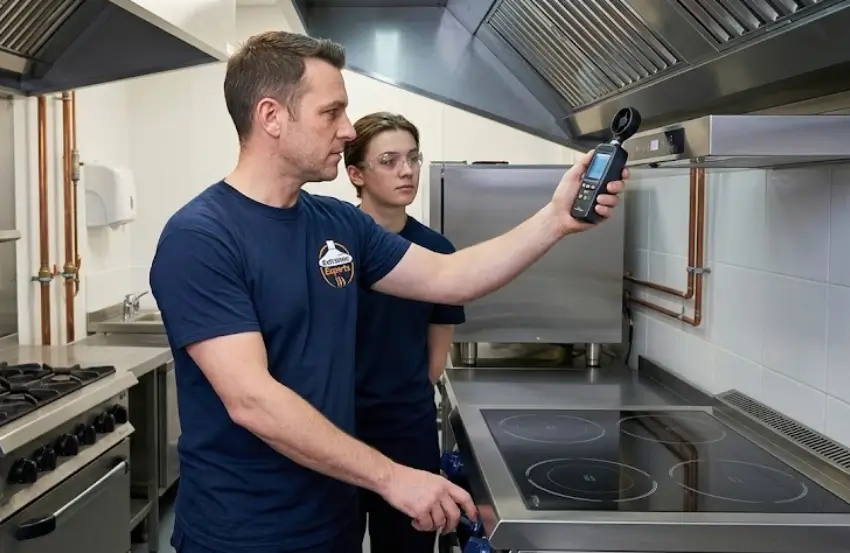
Where poor airflow contributes to contamination, the extraction system should be assessed as a whole. This may involve checking filters, fan operation, ductwork condition and replacement-air arrangements. The objective is to correct the cause rather than simply remove visible grease.
Can Grease Dripping Indicate a Problem Inside the Ductwork?
Yes. Grease appearing around the upper canopy or ductwork connection may indicate contamination within the extraction route. Grease particles can pass through filters and accumulate on duct surfaces. Over time, these deposits may become substantial, particularly in kitchens with high cooking volumes. Damaged joints, unsuitable construction or contaminated connections can allow grease to escape. This is why commercial kitchen extraction maintenance should consider more than the visible canopy.
A professional assessment may need to examine accessible duct sections, the fan and other components. The BESA TR19 Grease specification provides recognised industry guidance for managing grease accumulation and associated fire risks within commercial kitchen extraction systems. It is important to distinguish this industry specification from statutory legal requirements. The appropriate cleaning programme should reflect system usage, contamination levels, fire risk assessments and relevant obligations.
How Often Should Commercial Kitchen Canopy Filters Be Cleaned?
There is no single cleaning frequency suitable for every commercial kitchen. A busy restaurant operating high-output frying equipment may accumulate grease much faster than a kitchen with relatively light cooking activity. Filter cleaning should follow the manufacturer’s recommendations and be adjusted according to actual contamination. Kitchen staff should check accessible filters and grease collection arrangements as part of an appropriate routine.
However, cleaning the filters does not replace professional inspection and cleaning of the wider extraction system. Grease can accumulate in ductwork and fan components even when we maintain filters. For this reason, we should treat canopy cleaning, extraction ductwork hygiene, and mechanical ventilation maintenance as related but distinct activities.
What Does TR19 Grease Say About Kitchen Extraction Maintenance?
TR19 Grease is a specification published by the Building Engineering Services Association. It focuses on managing fire risks associated with grease accumulation in commercial kitchen extraction systems. The specification provides guidance on inspection, cleaning and verification. Cleaning requirements depend on the intensity of kitchen use and the condition of the extraction system. BESA’s published guidance identifies baseline cleaning intervals based on daily operating hours, while also recognising that more frequent cleaning may be required.
These recommendations should not be confused with a universal legal cleaning interval. Commercial kitchen operators should establish a suitable programme using competent professional advice, system condition, risk assessments and relevant insurance requirements. A dripping canopy may indicate that the current maintenance arrangements need to be reviewed.
When Does a Leaking Kitchen Canopy Need Repair or Replacement?
Not every grease leak requires a new canopy. Appropriate cleaning, component replacement, or repairs can address many problems. For example, you can correct a blocked collection channel or incorrectly positioned filter without replacing the complete installation. However, you may need to do more extensive work where the canopy is damaged, poorly constructed, or unsuitable for the cooking equipment.
When Repairs May Be Appropriate
Repairs may be suitable when the canopy structure remains sound and the fault is limited to a specific component or connection. Examples include damaged collection arrangements, defective joints or replaceable filter components. The repair should address the underlying cause and maintain the suitability of the extraction system.
When Canopy Replacement May Be Considered
Replacement or redesign may be appropriate when the canopy cannot provide effective capture, its construction is unsuitable or extensive damage makes repair impractical. Changes in kitchen layout or cooking equipment can also justify reviewing the existing canopy.
A professional assessment can establish whether targeted repairs, modifications or a replacement installation provide the most suitable outcome.
How Can Commercial Kitchens Prevent Future Grease Leaks?
Preventing grease leaks requires a combination of routine housekeeping, appropriate cleaning and professional extraction system maintenance.
Maintain Filters and Collection Points
Check and clean accessible grease filters and collection arrangements according to the equipment instructions and kitchen usage. Staff should report unusual contamination or recurring dripping promptly.
Arrange Suitable Ductwork Cleaning
Grease can accumulate beyond the canopy. A risk-based cleaning programme should include the extraction ductwork where necessary, using appropriately competent specialists.
Monitor Extraction Performance
Investigators should examine changes in noise, airflow, or the ability of the canopy to capture cooking fumes. Early identification of mechanical or ventilation faults can help prevent wider problems.
Keep Maintenance Records
Documenting inspections, cleaning and repairs makes it easier to identify recurring issues. Records also help facilities managers understand the system’s maintenance history and plan future work.
Review the System After Kitchen Changes
New cooking equipment, longer operating hours or increased production can alter ventilation requirements. A review can help establish whether the existing canopy and extraction system remain suitable.
Why Should London Commercial Kitchens Arrange Professional Canopy Inspections?
Commercial kitchens in London operate in many different types of buildings. Restaurants, hotels, takeaways and catering facilities may have extraction systems installed through ceiling voids, external walls or complex duct routes. The visible canopy is only one part of the installation.
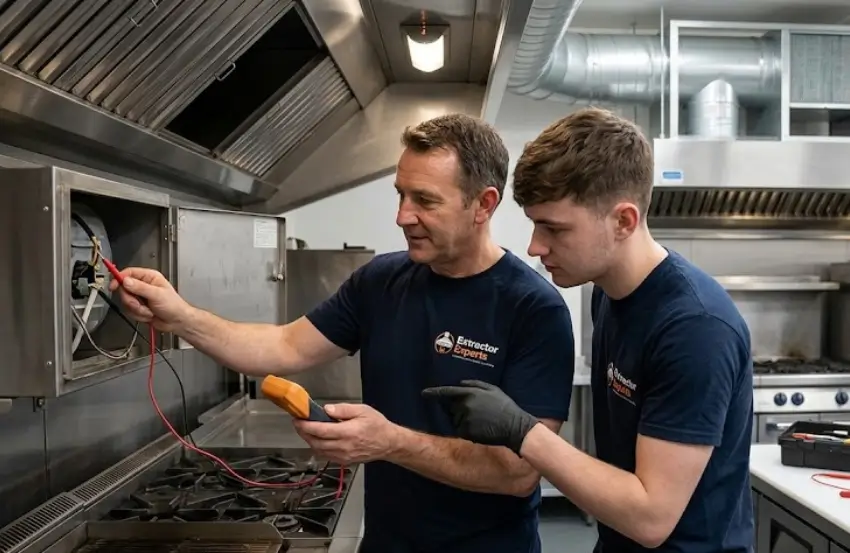
Professional fault finding can help you identify whether grease leakage is associated with the canopy, filters, ductwork, fan performance, or system design. Extractor Experts Ltd provides commercial kitchen canopy installation, extraction system fault finding, repairs and planned maintenance services across London, Greater London and Surrey. A professional assessment can help identify the appropriate corrective work and reduce the risk of recurring grease leaks.
Frequently Asked Questions
1. Why is grease dripping from my commercial kitchen canopy?
Grease usually drips from a commercial kitchen canopy because of excessive grease deposits, blocked collection channels, dirty filters or damaged connections. A professional identifies the exact cause during an inspection and determines whether cleaning or repairs are required.
2. Is grease dripping from a kitchen extractor hood a fire hazard?
Yes. Accumulated grease is combustible and can increase fire risk when exposed to sufficient heat or an ignition source. Investigators should promptly examine dripping grease, particularly where it falls onto hot cooking equipment.
3. Can blocked grease filters cause a commercial kitchen canopy leak?
Yes. Heavily contaminated filters can interfere with grease collection and may allow deposits to accumulate or drip from unintended locations. Cleaning or replacing damaged filters can help, although you should also consider other causes.
4. Can a leaking commercial kitchen canopy be repaired?
You can repair many canopy leaks when the problem involves damaged joints, collection arrangements, or replaceable components. Extensive damage or unsuitable canopy design may require modifications or replacement.
5. How can I prevent grease from dripping from my kitchen canopy?
Maintain filters and collection channels, arrange suitable extraction system cleaning, monitor airflow and investigate early signs of contamination. Professional inspection helps identify underlying problems that routine surface cleaning may not resolve.
Conclusion: Stop Commercial Kitchen Canopy Grease Leaks Before They Become Serious
Grease dripping from a commercial kitchen canopy is a warning sign that the extraction system requires attention. Common causes include contaminated filters, blocked grease channels, damaged connections, excessive grease accumulation and unsuitable ventilation conditions.
While routine cleaning can resolve some problems, persistent leaks may indicate faults that require a professional to inspect or repair. Addressing the underlying cause helps reduce contamination, maintain extraction performance and manage fire risks.