A commercial extraction fan running but not extracting air usually indicates a problem with airflow, fan performance or the wider ventilation system. Although the motor may be operating and the fan may be making noise, that does not necessarily mean enough air is moving through the extraction canopy and ductwork.
Common causes include grease-clogged filters, restricted ductwork, damaged fan impellers, slipping drive belts, incorrect fan speed, inadequate replacement air and excessive system resistance. In some installations, a fan can rotate without delivering the airflow needed to capture cooking fumes effectively.
The problem should be investigated rather than assuming the fan motor needs replacing. A commercial kitchen extractor fan that is not working properly may have a relatively localised mechanical fault or a wider ventilation design issue.
Extractor Experts Ltd provides commercial kitchen extraction fault finding, commercial extraction fan repairs and ventilation maintenance across London, Greater London and Surrey. Professional airflow measurements and system inspections can help identify why a fan is running but failing to extract effectively.
Why Is My Commercial Extraction Fan Running but Not Extracting?
A commercial extraction fan can operate mechanically while delivering insufficient airflow. The fan’s purpose is not simply to rotate. It must create enough pressure to overcome resistance within the extraction system and move the required volume of air through the canopy, filters, ductwork and discharge outlet. If resistance becomes excessive or the fan cannot operate at its intended duty, extraction performance may deteriorate.
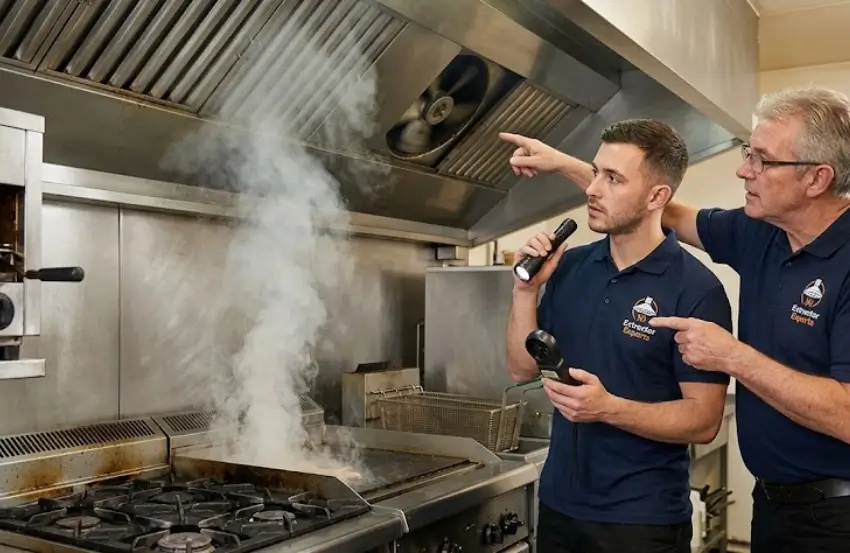
This can happen gradually as grease deposits accumulate or suddenly following a mechanical or electrical fault. Kitchen operators may first notice that smoke escapes from the canopy during busy service. Steam may remain in the cooking area, or staff may report that the kitchen feels hotter than usual. A fan that sounds normal can still be underperforming. The correct diagnosis involves checking the complete airflow path, not just the fan motor.
What Are the Most Common Causes of Poor Commercial Extraction Fan Airflow?
Several faults can cause a commercial extractor fan to run without moving enough air.
1. Blocked or Grease-Clogged Canopy Filters
Grease filters collect a proportion of the airborne grease generated during cooking. Over time, accumulated grease and other contamination can restrict the passage of air through the filters. When resistance increases, the system may struggle to maintain the required extraction rate.
This can result in smoke or steam escaping from the canopy even though the fan continues to operate. Filters should be inspected and cleaned according to the manufacturer’s instructions and the kitchen’s maintenance arrangements. However, removing filters permanently is not an acceptable solution. Grease filtration is an important part of the extraction system.
2. Grease Build-Up Inside Extraction Ductwork
Commercial kitchen ductwork carries grease-laden air towards the extraction fan and discharge point. Even where canopy filters are maintained, grease deposits can accumulate inside the ductwork. Significant contamination can restrict airflow and increase resistance.
It can also create a serious fire hazard. Grease extract ductwork should be inspected and cleaned using appropriate methods by competent personnel. Kitchen staff should not enter ductwork or attempt to access concealed sections without suitable training and precautions.
3. Damaged or Contaminated Fan Impeller
The impeller is the rotating component responsible for moving air through the fan. Grease deposits, corrosion, damage or other contamination can affect its performance. An impeller may continue to rotate while moving less air than expected. Mechanical damage can also produce vibration or unusual noise. A professional inspection can establish whether the impeller requires cleaning, repair or replacement. The fan must be safely isolated before internal components are inspected.
4. Slipping or Worn Fan Drive Belts
Some commercial extraction fans use belt-driven arrangements. In these systems, the motor transfers power to the fan through one or more belts. A worn, loose or slipping belt may allow the motor to run while the fan rotates too slowly. The result can be reduced airflow. Other installations use direct-drive fans and do not have belts. An engineer should first identify the fan arrangement before investigating this potential cause.
5. Incorrect Fan Rotation
Some fan types can rotate in the wrong direction because of electrical or control-related problems. The motor may run, but the fan may deliver substantially less airflow than intended. This issue can arise following certain electrical changes or equipment replacements. Rotation direction should be checked by a competent engineer using the manufacturer’s information. Electrical connections must not be altered by unqualified kitchen staff.
6. Incorrect Fan Speed or Control Settings
Commercial extraction systems may use fixed-speed motors, variable-speed drives or other control arrangements. A fan running at an unexpectedly low speed may not deliver the required airflow. Control settings can sometimes be changed during maintenance, repairs or equipment upgrades.
However, increasing fan speed without reviewing the system is not always appropriate. Higher speeds may increase noise, energy use and pressure losses. A professional should confirm the intended operating duty before making adjustments.
7. Inadequate Replacement Air
A commercial kitchen cannot continuously extract large volumes of air without an adequate supply of replacement air. If the kitchen becomes excessively negatively pressurised, the extraction system may struggle to maintain effective airflow. Potential symptoms include strong draughts through doorways, difficult-to-open doors and poor canopy capture.
Replacement air may enter through designed natural openings or mechanical supply-air equipment. The appropriate arrangement depends on the kitchen and extraction system. Simply opening a nearby door may create cross-draughts that interfere with canopy performance.
8. Restricted External Discharge
The external discharge outlet is the final part of the extraction airflow route. A damaged terminal, unsuitable fitting or obstruction can increase resistance. This may reduce the amount of air moving through the system. Discharge outlets are sometimes located at roof level or in other difficult-to-access areas. Inspection should be undertaken safely by competent personnel.
9. Excessive Ductwork Resistance
Poor ductwork design can cause weak extraction even when the fan and filters are in reasonable condition. Long duct routes, unnecessary bends, restrictive transitions and unsuitable duct dimensions can increase pressure losses. A fan selected for a short, low-resistance route may not perform adequately after substantial ductwork modifications. This problem requires a system-level assessment. Replacing the fan without reviewing the ductwork may not solve the underlying issue.
10. Fan Motor or Mechanical Performance Problems
A motor can appear to operate while the connected fan performs below its intended duty. Possible contributing factors include mechanical wear, bearing problems, drive faults or control-related limitations. These faults may cause abnormal noise, vibration, overheating or reduced fan speed. A competent engineer can assess the motor, fan assembly and controls to determine the appropriate repair.
How Can You Tell Whether a Commercial Extractor Fan Is Actually Extracting Air?
A running fan is only one indication that the ventilation system is operating. Effective extraction depends on capturing cooking emissions and transporting the required airflow through the system.
Smoke Escaping from the Canopy
Cooking fumes escaping beyond the canopy may indicate inadequate capture. This can be caused by poor airflow, canopy positioning or disruptive air movement. The symptom does not automatically identify the fan as the cause.
Steam Remaining Around Cooking Equipment
Steam lingering in the kitchen may indicate insufficient capture or extraction. The problem may become more noticeable during periods of intensive cooking.
Unusual Heat Around the Cooking Line
Poor extraction can contribute to uncomfortable heat accumulation. However, kitchen temperature is also influenced by replacement air, cooking equipment and other environmental conditions.
Abnormal Fan Noise or Vibration
Grinding, rattling or excessive vibration can indicate mechanical deterioration. These symptoms should be investigated promptly.
Reduced Airflow at the Canopy
Weak airflow may be noticeable at the canopy, but subjective checks are not sufficient to confirm system performance. A professional airflow assessment provides more reliable information. Kitchen operators should not use naked flames, loose materials or improvised smoke tests near cooking equipment to assess extraction.
What Should You Check First When the Fan Is Running but Not Extracting?
Commercial kitchen managers can make some basic observations without dismantling the ventilation system. First, confirm whether the problem affects the entire cooking line or only one section of the canopy. Next, check whether the extraction controls are set to the normal operating position. Look for visible signs of heavy grease contamination on accessible filters, provided the inspection can be performed safely. Listen for unusual fan noise and note whether the problem started suddenly or developed gradually.
It is also useful to record whether the issue occurs throughout the day or only during busy cooking periods. Check whether doors are unusually difficult to open or strong draughts occur when extraction is operating. These observations can help an engineer identify possible airflow or replacement-air problems. Do not remove guards, open electrical enclosures, access roof-mounted fans or dismantle ductwork. Where extraction is not effectively controlling cooking fumes, the affected cooking activity should be stopped or reduced until safe operation can be established. Gas-fired appliances require particular care because inadequate ventilation can create additional combustion safety concerns.
How Do Engineers Diagnose a Commercial Extraction Fan with Poor Airflow?
Professional commercial kitchen extraction fault finding follows a systematic process. The objective is to establish why the fan is not delivering the required extraction performance.
Step 1: Review the Symptoms
The engineer gathers information about the problem. This includes when the fault started, which cooking appliances are affected and whether any recent changes have been made. Maintenance history and previous repair records may also be useful.
Step 2: Inspect the Canopy and Filters
The canopy and accessible filtration components are checked for visible contamination, damage and other restrictions. The engineer also reviews the relationship between the canopy and cooking equipment.
Step 3: Assess Fan Operation
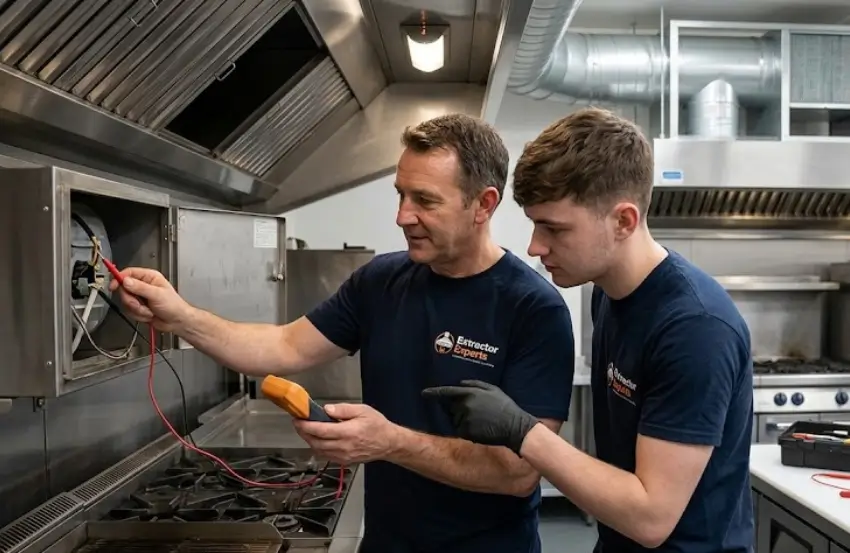
The fan is inspected for appropriate operation, abnormal vibration, noise and visible mechanical problems. Where relevant, the engineer checks drive components and fan rotation. Any intrusive inspection requires appropriate isolation and safety procedures.
Step 4: Measure Airflow
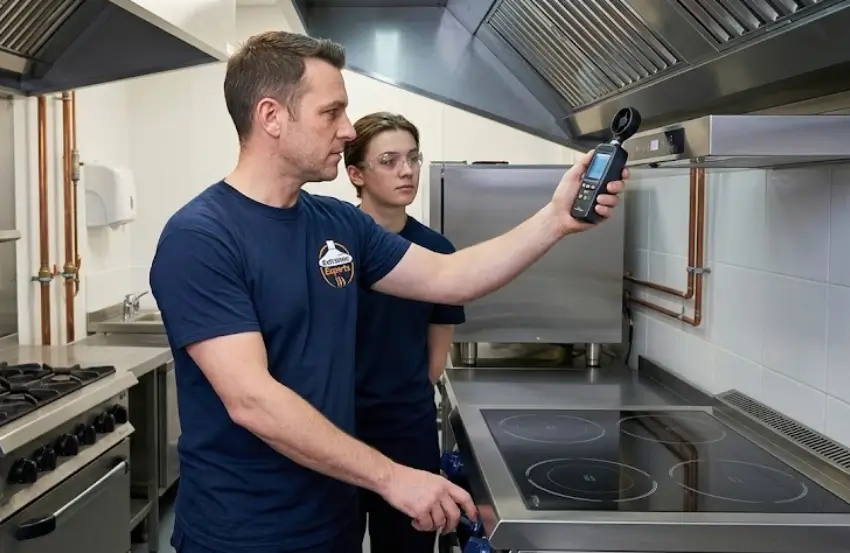
Suitable measurements help establish whether the extraction system is delivering the intended airflow. The measurement method depends on the system arrangement and available access. Where reliable design or commissioning information exists, engineers can compare the actual performance of commercial kitchen extraction systems with their specified operating requirements.
Step 5: Investigate System Resistance
The engineer may assess pressure losses and inspect components that could be restricting airflow. Filters, ductwork, fittings and the discharge arrangement may all contribute to resistance.
Step 6: Review Replacement Air
The supply-air arrangement is assessed to determine whether the kitchen has sufficient replacement air. The engineer also considers whether draughts or pressure imbalance are affecting canopy capture.
Step 7: Identify the Corrective Work
Once the cause has been established, the engineer can recommend suitable action. This may involve cleaning, adjustment, mechanical repair, control changes or more extensive system modifications. The correct solution depends on the findings.
Can a Commercial Extraction Fan Run Without Moving Enough Air?
Yes. Fan rotation does not guarantee adequate airflow. A fan must operate at a suitable combination of airflow and pressure. If system resistance increases, the amount of air delivered can decrease. Similarly, reduced fan speed or damaged components may prevent the fan from meeting its intended performance. The relationship between fan output and system resistance is one reason professional diagnosis is important.
A fan may appear operational during a visual inspection while the kitchen still experiences poor extraction. Measurements and appropriate technical checks help distinguish a mechanical fan problem from a wider ventilation issue.
Can Blocked Ductwork Cause an Extractor Fan to Lose Suction?
Yes. Restrictions within extraction ductwork can increase resistance and reduce airflow. Grease deposits, damaged sections and unsuitable fittings may contribute to the problem. The effect depends on the extent and location of the restriction. Blocked ductwork can also create fire safety concerns where grease deposits have accumulated.
A competent inspection should establish whether cleaning, repairs, modifications or new commercial kitchen ductwork installation is necessary to restore suitable extraction performance. Increasing fan speed should not be used as a substitute for addressing significant grease contamination.
Does Negative Pressure Affect Commercial Kitchen Extraction?
Yes. Excessive negative pressure can interfere with ventilation performance. When extraction removes more air than the kitchen can replace, the pressure within the space may fall relative to surrounding areas. This can produce strong draughts and make doors difficult to open. It may also affect the performance of appliances or ventilation arrangements that depend on suitable air supply.
Effective commercial kitchen ventilation design involves reviewing extraction airflow and replacement-air provision together to help prevent pressure imbalance. Simply fitting a more powerful extraction fan can make pressure imbalance worse. Where gas appliances are installed, ventilation and combustion-air requirements must be considered by appropriately competent professionals.
Should You Repair or Replace a Commercial Extractor Fan?
Repair may be appropriate when the fault is localised and the existing fan remains suitable for the system. Examples include certain drive faults, worn mechanical components or repairable control problems. Replacement may be more appropriate where the fan is severely deteriorated, unsuitable for the required duty or no longer practical to maintain.
However, a fan should not be replaced solely because the kitchen has poor extraction. The problem may originate from blocked filters, contaminated ductwork, inadequate replacement air or excessive system resistance. A professional assessment helps determine whether repairing the existing equipment will restore suitable performance.
How Can Commercial Kitchens Prevent Poor Extraction Airflow?
Planned commercial kitchen extraction maintenance helps identify developing faults before they cause major disruption. Grease filters should be cleaned according to the manufacturer’s instructions and the kitchen’s maintenance programme. Ductwork cleanliness should be assessed using appropriate inspection arrangements. Fan components, controls and mechanical drives should also be checked at suitable intervals.
Maintenance frequency depends on cooking intensity, operating hours and equipment condition. Kitchen managers should report unusual noise, vibration, reduced capture or recurring ventilation problems. Keeping records of servicing, inspections and airflow measurements can help identify deterioration over time. When cooking equipment or kitchen layouts change, the extraction system should be reviewed to confirm continued suitability.
What UK Safety Guidance Applies to Poor Kitchen Extraction?
Commercial kitchens need suitable ventilation to control cooking emissions and support safe working conditions. The HSE guidance on catering ventilation explains the importance of effective extraction, replacement air and appropriate maintenance in commercial catering premises. Where gas-fired cooking equipment is installed, adequate ventilation is particularly important because combustion safety must also be considered. The BESA DW/172 specification provides industry guidance for commercial kitchen ventilation system design and construction.
Grease extract ductwork also requires appropriate cleaning and inspection arrangements. The relevant legal and technical requirements depend on the building, appliances and installation. A running fan should not be treated as proof that the ventilation system is operating safely. Where extraction failure creates unsafe conditions, affected cooking operations should not continue until the problem has been addressed.
Commercial Extractor Fan Repairs in London and Surrey
Commercial kitchens rely on effective extraction during busy service periods. A fan that runs but fails to remove cooking fumes can affect working conditions and interrupt kitchen operations. Extractor Experts Ltd provides commercial extraction fan fault finding, repairs, ventilation inspections and maintenance across London, Greater London and Surrey.
The company is based in Staines-upon-Thames and works with commercial catering businesses, including restaurants, hotels, cafés and other professional kitchens. A professional inspection can help determine whether poor airflow is caused by the fan itself, blocked ductwork, inadequate replacement air or another part of the system.
Frequently Asked Questions
1. Why is my commercial extractor fan running but not extracting air?
Common causes include blocked grease filters, restricted ductwork, damaged fan components, incorrect fan speed and inadequate replacement air. A professional assessment can identify the actual fault.
2. Can a commercial extractor fan spin but have no suction?
Yes. A fan can rotate while delivering insufficient airflow because of mechanical problems, excessive system resistance or unsuitable operating conditions.
3. Will cleaning the grease filters improve extraction?
Cleaning heavily contaminated filters may improve airflow if they are contributing to the restriction. However, poor extraction can also be caused by ductwork, fan or replacement-air problems.
4. Is it safe to use a commercial kitchen when the extraction fan is not working properly?
Cooking should not continue where ineffective extraction creates unsafe conditions. Stop or reduce the affected cooking operation and arrange a competent assessment. Gas-fired equipment may introduce additional combustion safety risks.
5. When should I call an engineer for poor commercial kitchen extraction?
Arrange an inspection when cooking fumes escape the canopy, airflow becomes noticeably weaker, the fan develops unusual noise or the problem persists after normal, safe maintenance checks.
Conclusion: Why Is the Fan Running but Not Extracting?
A commercial extraction fan running but not extracting usually means the ventilation system is not delivering sufficient effective airflow. The cause may involve blocked filters, grease deposits, mechanical faults, incorrect controls, inadequate replacement air or excessive ductwork resistance.
Because several components can produce similar symptoms, replacing the fan without proper diagnosis may not resolve the problem. Professional fault finding helps identify the underlying cause and determine the appropriate repair or system improvement.