Commercial kitchen extraction services London involve designing, installing, repairing and maintaining ventilation systems that remove cooking fumes, excess heat, airborne grease, steam and unwanted odours from professional kitchens. These services help restaurants, hotels, cafés, takeaways and catering facilities maintain effective airflow and a more comfortable working environment. A properly designed commercial kitchen extraction system generally includes an extraction canopy, grease filters, ductwork, an extractor fan and a suitable replacement air supply. These components work together to capture contaminated air near cooking equipment and discharge it safely outside the building.
Professional commercial kitchen ventilation services also address system performance, airflow balance, equipment faults and ongoing maintenance requirements. For London businesses, selecting a suitable extraction solution requires careful consideration of kitchen dimensions, cooking equipment, operating hours, neighbouring properties and applicable UK ventilation guidance.
Extractor Experts provides commercial kitchen extraction services London, including system design, canopy installation, ductwork, extractor fan repairs and planned maintenance. Based in Staines-upon-Thames, Surrey, the company supports commercial kitchen projects across London and Greater London. Understanding how these services work can help business owners make informed decisions when installing a new kitchen, upgrading existing equipment or addressing ventilation problems.
Why Are Commercial Kitchen Extraction Services Important?
Commercial cooking produces considerably more heat, moisture and airborne contaminants than many other indoor activities. Busy kitchens operating fryers, grills, ovens and other catering equipment require ventilation capable of managing these conditions throughout working hours.
Without effective extraction, cooking fumes can spread beyond the preparation area, while excess heat and humidity may make working conditions uncomfortable.
Airborne grease can also accumulate on nearby surfaces and inside ventilation components, increasing cleaning requirements and contributing to fire-related hazards.
The Health and Safety Executive (HSE) explains that catering kitchens need suitable ventilation to remove fumes, vapours and excess heat and discharge them to an appropriate external location.
Supporting a Safer Kitchen Environment
An appropriately designed extraction system captures cooking emissions close to their source, reducing the amount that spreads throughout the kitchen.
This is particularly important for commercial kitchens operating multiple cooking appliances simultaneously.
Improving Staff Comfort
Poor ventilation can create uncomfortable temperatures, particularly during busy service periods.
Effective extraction, supported by suitable replacement air, helps manage heat and maintain more comfortable working conditions for kitchen staff.
Managing Grease and Odours
Commercial extraction systems help capture grease-laden air before it spreads throughout the premises.
Appropriate filtration, ductwork design and discharge arrangements also contribute to better odour management, which can be particularly important for London restaurants operating near residential properties.
What Do Commercial Kitchen Extraction Services Include?
Professional extraction services cover several stages of a ventilation system’s working life, from initial planning and installation to inspections, repairs and upgrades.
Understanding these services makes it easier to identify what a commercial kitchen requires.
1. Commercial Kitchen Extraction System Design
Every professional kitchen has different ventilation requirements. A small café preparing light meals will generally have different extraction needs from a restaurant operating multiple fryers, chargrills and high-output cooking appliances.
Professional ventilation design considers the kitchen layout, cooking equipment, heat output, required airflow, canopy positioning and available ductwork routes.
A suitable design must also account for replacement air. Removing air without introducing an appropriate supply can create excessive negative pressure and reduce system performance.
Extractor Experts provides commercial ventilation design for professional kitchens requiring suitable extraction and airflow solutions.
2. Commercial Kitchen Extractor Installation
Commercial kitchen extractor installation involves selecting and fitting the components needed to capture and remove contaminated cooking air.
The installation process may include canopy positioning, ductwork connections, extractor fan installation, filtration arrangements and associated ventilation controls.
Correct component selection is essential because an oversized or poorly matched system can introduce unnecessary noise and energy consumption, while insufficient extraction may fail to capture cooking emissions effectively.
A professional installation should be followed by appropriate testing and commissioning to assess whether the system performs as intended.
3. Commercial Kitchen Canopy Installation
A kitchen extraction canopy is one of the most visible components of a commercial ventilation system.
Positioned above cooking equipment, it captures rising heat, fumes, steam and grease-laden air before these contaminants spread throughout the room.
The canopy must be suitable for the cooking arrangement, equipment dimensions and required extraction rate.
Its position also matters. A poorly positioned canopy may allow cooking fumes to escape, even when the extractor fan is operating.
Commercial kitchen canopy solutions should therefore be considered as part of the complete ventilation design rather than as an isolated installation.
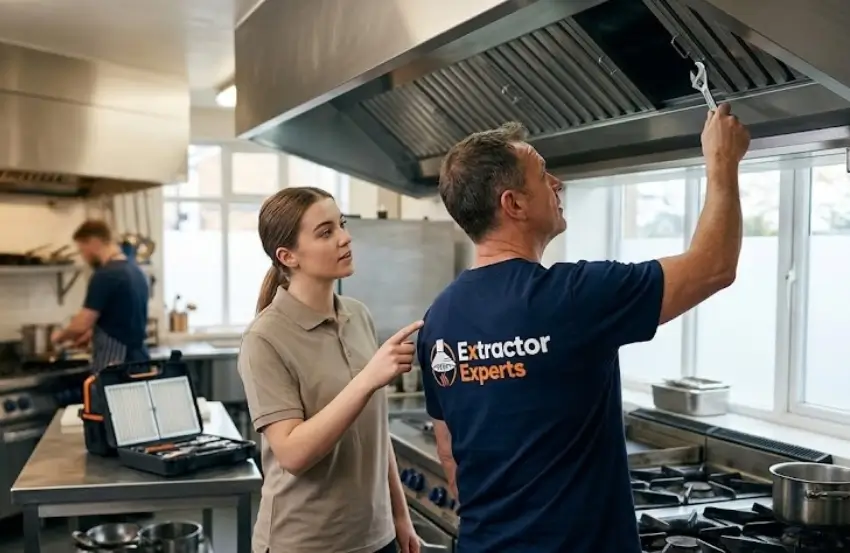
4. Commercial Ductwork Installation
Ductwork transports extracted cooking air from the canopy towards the designated discharge point.
A suitable ductwork installation must consider airflow resistance, access for cleaning, grease accumulation, available space and applicable fire-safety requirements.
Poorly arranged ductwork can reduce extraction performance and make future inspections or maintenance more difficult.
For London premises with limited installation space, existing building structures and neighbouring properties may also influence the proposed ductwork route.
5. Commercial Extractor Fan Repairs
Extractor fans provide the mechanical force needed to move contaminated air through the extraction system.
When a fan develops a fault, kitchen ventilation performance can deteriorate significantly.
Common warning signs include unusual vibration, excessive noise, inconsistent extraction, reduced airflow or a fan that stops operating altogether.
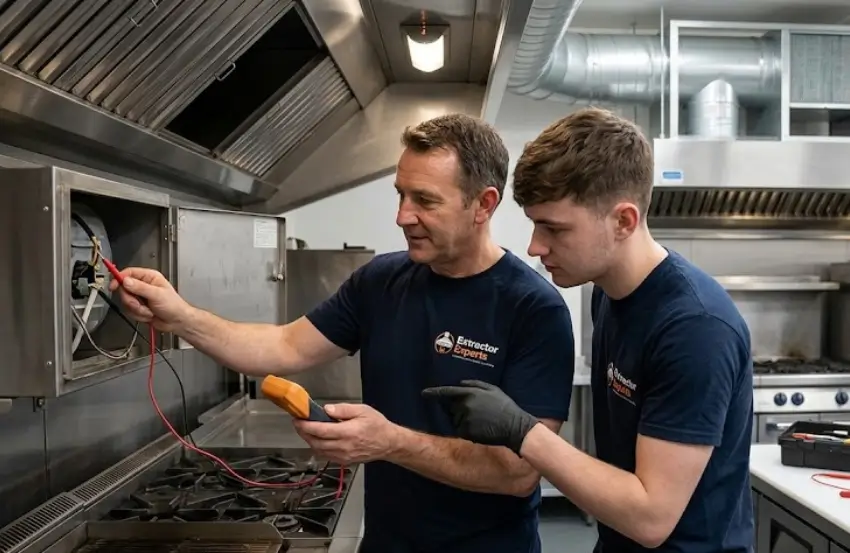
Professional fault finding can help identify whether the problem involves the motor, electrical controls, mechanical components, airflow restrictions or another part of the system.
Extractor Experts provides commercial extractor fan repairs and extraction system fault diagnosis to help businesses address ventilation problems.
6. Planned Extraction System Maintenance
Commercial kitchen extraction systems operate in demanding environments where heat, moisture and grease are produced regularly.
Over time, these conditions can affect ventilation performance and component reliability.
Planned maintenance allows businesses to identify developing faults, assess system condition and arrange necessary repairs before problems become more disruptive.
Maintenance requirements vary according to equipment, operating intensity, system design and manufacturer recommendations.
Grease extract cleaning should also be arranged at a frequency appropriate to the kitchen’s use and fire-risk assessment, following relevant industry guidance.
How Do Commercial Kitchen Extraction Systems Work?
A commercial kitchen extraction system works by capturing contaminated air above cooking equipment and transporting it through a controlled ventilation route.
As cooking takes place, hot air, steam and airborne grease rise towards the extraction canopy.
The extractor fan creates airflow that draws these emissions into the canopy, where grease filters capture a proportion of the grease particles before the air enters the ductwork.
The remaining extracted air travels through the ventilation system and is discharged at a suitable external location. However, extraction alone is not enough.
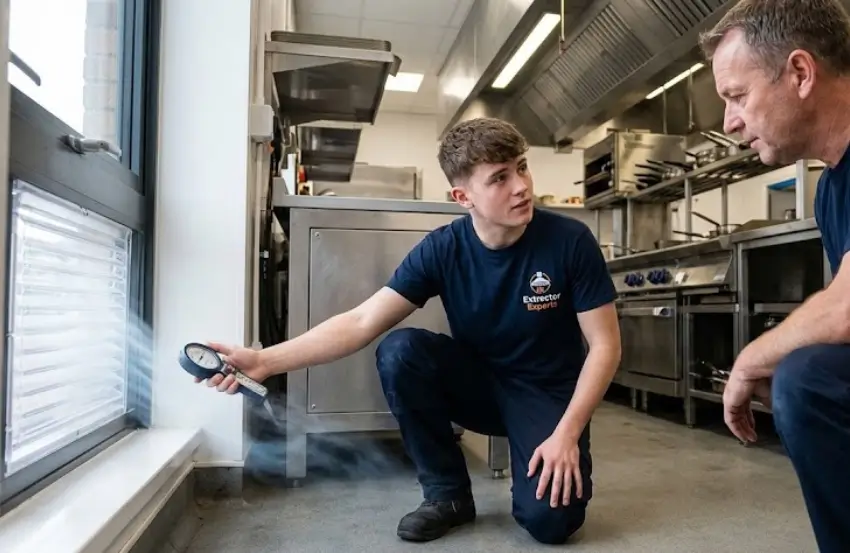
The air removed from the kitchen must be replaced with an appropriate supply of fresh air. Without sufficient replacement air, the system may experience pressure imbalance, poor capture performance or other operational problems.
This is particularly important where gas-fired catering equipment is installed. HSE guidance highlights the need for adequate make-up air to support safe combustion and reduce the risk of harmful combustion products accumulating.
A complete extraction solution therefore considers the interaction between canopy performance, fan capacity, ductwork design and the surrounding kitchen environment.
What Should London Businesses Consider Before Installing Kitchen Extraction?
Commercial kitchen extraction installation requires more than selecting a fan and connecting it to a canopy.
London commercial premises can present additional design considerations, particularly where kitchens occupy existing buildings, mixed-use developments or properties close to neighbouring businesses and homes.
Kitchen Layout and Cooking Equipment
The first consideration is the type and quantity of cooking equipment.
A restaurant operating high-temperature cooking appliances may require a different extraction arrangement from a café preparing lighter meals.
Canopy dimensions, extraction capacity and ventilation design should reflect the actual cooking operation.
Available Ductwork Routes
Some commercial buildings offer straightforward access to suitable external discharge locations, while others have restricted internal space or complicated ductwork routes.
A professional assessment helps establish an appropriate installation arrangement before work begins.
Noise and Odour Considerations
Commercial kitchen extraction can produce mechanical noise and discharge cooking odours into the surrounding environment.
These considerations are particularly relevant where premises are close to residential accommodation or other sensitive neighbouring uses.
Depending on the property and proposed works, local planning requirements may also need consideration.
Future Maintenance Access
A ventilation installation should allow suitable access for inspection, servicing and cleaning.
Designing around maintenance requirements from the beginning can reduce difficulties when the system requires attention later.
What UK Standards Apply to Commercial Kitchen Extraction?
Commercial kitchen extraction systems should be designed and maintained with consideration for applicable UK safety requirements and recognised industry guidance.
Two important industry references are DW/172 and TR19 Grease.
DW/172 – Kitchen Ventilation Systems
DW/172 is a recognised specification published by the Building Engineering Services Association (BESA).
It provides guidance covering commercial kitchen ventilation design, installation and maintenance, including extraction rates, canopies, filtration, ductwork and associated system components.
The second edition was published in 2018 and incorporates a May 2024 addendum.
DW/172 is an industry specification rather than legislation in itself.
TR19 Grease – Extraction Hygiene
TR19 Grease provides industry guidance concerning grease accumulation, inspection and cleaning within commercial kitchen extraction systems.
Its purpose is different from DW/172.
DW/172 addresses the wider ventilation system, while TR19 Grease focuses on grease-related hygiene and associated risk management.
Commercial kitchen operators should establish appropriate cleaning and inspection arrangements based on system use, risk and applicable requirements.
HSE Ventilation Guidance
The HSE provides guidance for catering establishments, including ventilation performance, heat removal, replacement air and the responsibilities associated with commercial kitchen equipment.
Professional advice is particularly important when planning changes involving gas-fired cooking appliances, combustion ventilation or significant modifications to existing extraction arrangements.
What Are the Warning Signs of Poor Kitchen Extraction?
A commercial kitchen extraction system may continue operating even when its performance has deteriorated.
Recognising early warning signs can help business owners arrange professional inspections before ventilation problems become more disruptive.
One common indication is cooking smoke or steam escaping beyond the extraction canopy. This may suggest inadequate airflow, incorrect canopy positioning or a restriction elsewhere in the system.
Persistent cooking odours inside the premises can also indicate ineffective extraction.
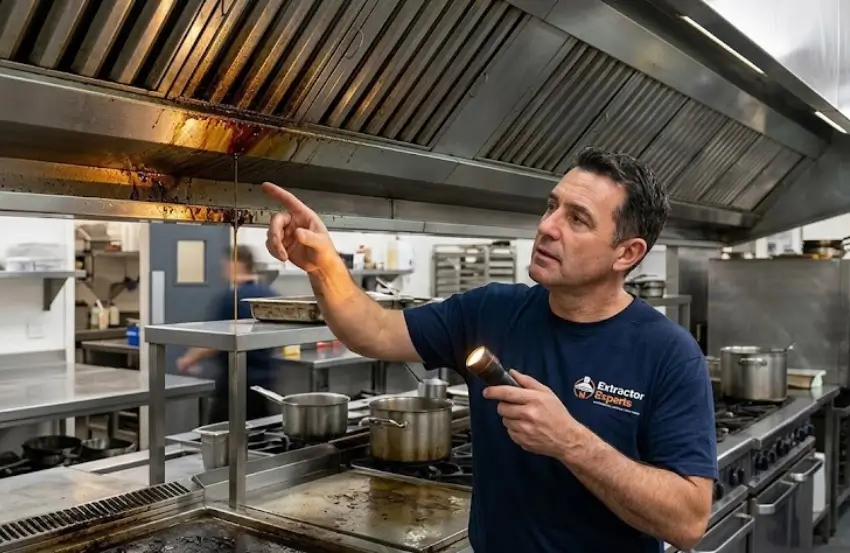
Other symptoms include unusual fan noises, excessive vibration, uncomfortable kitchen temperatures, visible grease accumulation and inconsistent ventilation performance.
Sometimes the underlying issue is relatively localised, such as a component fault. In other situations, the system may require a wider assessment of its design, ductwork or replacement air arrangements.
Kitchen operators should avoid attempting specialist electrical or mechanical repairs without appropriate qualifications.
Where ventilation failure affects the safe operation of cooking equipment, the affected equipment should not continue operating until the situation has been assessed by a competent professional.
Should You Repair or Replace an Existing Extraction System?
Not every extraction problem requires a complete system replacement.
Where the existing installation remains suitable for the kitchen’s requirements, repairing a faulty component may restore performance.
However, replacement or upgrading may become necessary when the system no longer supports the cooking operation or when repeated faults indicate wider limitations.
For example, a restaurant expanding its cooking equipment may discover that the original extraction capacity is no longer sufficient.
Similarly, a poorly designed ductwork arrangement may continue restricting airflow even after individual mechanical faults have been repaired.
A professional inspection can help determine whether repairs, component replacement, airflow adjustments or a broader system upgrade is appropriate.
The decision should consider the current condition of the equipment, operating requirements, installation constraints and expected future use.
How Often Should Commercial Kitchen Extraction Be Maintained?
Commercial kitchen extraction maintenance should be scheduled according to operating intensity, system condition, manufacturer instructions and relevant risk assessments.
A busy restaurant operating throughout the day may require more frequent attention than a smaller kitchen with limited cooking hours.
Regular maintenance helps identify fan faults, airflow problems, deteriorating components and other issues that may affect extraction performance.
Grease filters and ductwork also require suitable cleaning arrangements because grease accumulation can increase fire-related risks.
The HSE advises that mechanical kitchen ventilation systems should be maintained in efficient working order according to the manufacturer’s or installer’s instructions.
Why Choose Extractor Experts for Commercial Kitchen Extraction in London?
Extractor Experts Ltd provides commercial kitchen extraction and ventilation solutions for businesses requiring professional system design, installation, repairs and maintenance.
Based in Staines-upon-Thames, Surrey, the company supports commercial kitchen projects across London and Greater London.
Its services cover kitchen canopies, extraction systems, ductwork installation, ventilation design, extractor fan repairs and ongoing maintenance.
This allows businesses to seek assistance with different stages of their extraction system’s working life, whether planning a new commercial kitchen or investigating problems with an existing installation.
Restaurants, hotels, catering facilities, educational establishments and other commercial kitchen operators can contact Extractor Experts to discuss their ventilation requirements and arrange a suitable assessment.
Frequently Asked Questions
1. What are commercial kitchen extraction services?
Commercial kitchen extraction services include ventilation design, extractor installation, kitchen canopies, ductwork, fan repairs, system inspections and maintenance. These services help professional kitchens remove cooking fumes, grease-laden air, excess heat and steam.
2. Does every commercial kitchen need an extraction system?
Commercial kitchens require suitable ventilation for their cooking activities. The specific extraction arrangement depends on the appliances, cooking intensity, kitchen layout and relevant safety requirements. Mechanical extraction is commonly used above commercial cooking equipment.
3. How much does commercial kitchen extraction installation cost in London?
Installation costs depend on kitchen dimensions, equipment requirements, canopy size, ductwork routing, fan selection and installation complexity. A professional site assessment is generally needed before an accurate quotation can be prepared.
4. How often should commercial kitchen extraction systems be serviced?
Servicing frequency depends on operating hours, cooking intensity, system condition and manufacturer recommendations. Grease extract cleaning intervals should also reflect the relevant risk assessment and industry guidance.
5. Can an existing commercial kitchen extraction system be upgraded?
Yes. Depending on the condition and design of the installation, upgrades may involve extractor fans, canopies, ductwork, airflow arrangements or ventilation controls. A professional assessment helps determine which improvements are appropriate.
Conclusion: Choosing the Right Commercial Kitchen Extraction Services in London
Effective commercial kitchen extraction is essential for managing cooking fumes, airborne grease, excess heat and ventilation performance in professional catering environments.
From initial system design and installation to ongoing maintenance and repairs, each stage contributes to the reliable operation of a commercial kitchen.
London businesses should consider their cooking requirements, available installation space, ventilation performance and relevant UK guidance when selecting an extraction solution.