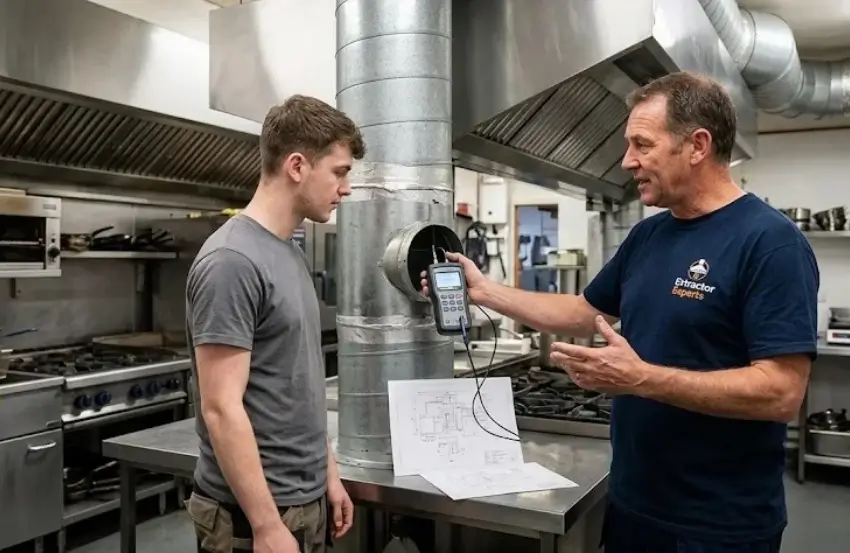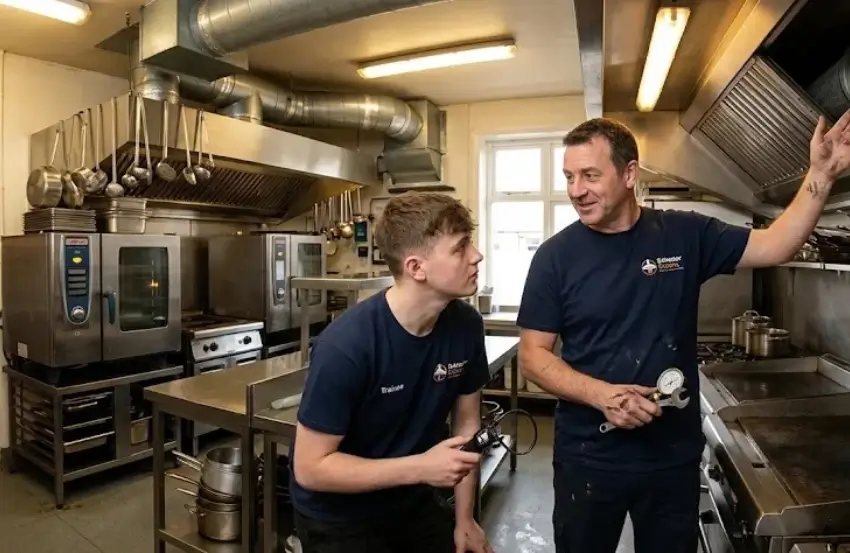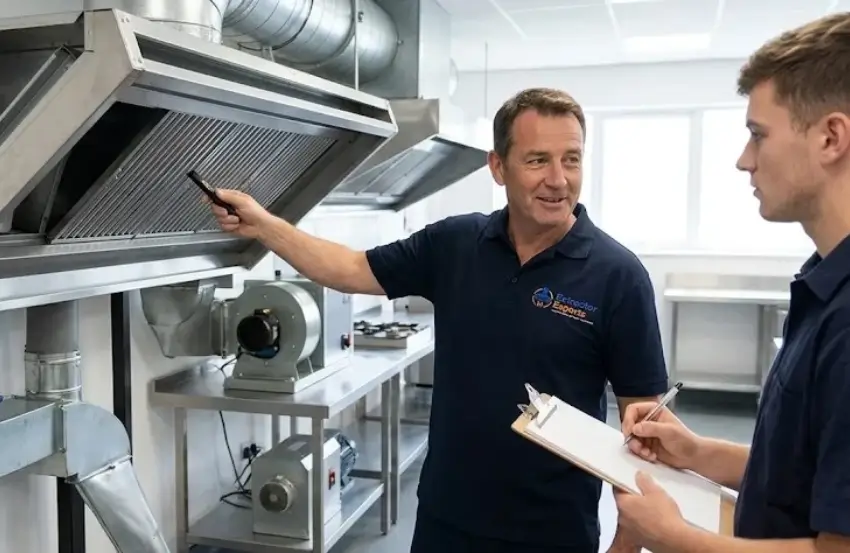
A commercial kitchen extraction fan keeps tripping when an electrical protection device or motor safety control detects a problem, or when a fault interrupts the fan’s normal operation. Common causes include motor overheating, damaged wiring, earth leakage, mechanical resistance, faulty control components and electrical overloads. The exact cause depends on whether a circuit breaker, residual current device (RCD), motor overload relay or another protective component is operating.
A commercial extractor fan tripping circuit breaker can disrupt kitchen ventilation, allowing heat, steam, smoke and cooking fumes to accumulate. Repeated shutdowns may also indicate a developing electrical or mechanical problem that requires professional attention.
The safest response is to stop using the affected system, avoid repeatedly resetting protective devices and arrange an appropriate inspection. A qualified professional can identify whether the fault originates in the fan motor, electrical supply, control panel or associated ventilation equipment.
At Extractor Experts, we provide commercial kitchen extraction fault finding, fan repairs and maintenance services for businesses across London, Greater London and Surrey. Understanding the possible causes of repeated tripping helps kitchen managers recognise warning signs, protect staff and arrange the right repair before the problem becomes more disruptive.
What Causes a Commercial Kitchen Extraction Fan to Keep Tripping?
Commercial extraction systems operate in demanding environments. Heat, airborne grease, moisture and long operating hours can affect mechanical and electrical components over time.
However, a fan that trips does not always have a defective motor. The fault could involve its power supply, protective devices, controls or another connected component.
1. Extractor Fan Motor Overheating
Motor overheating is one possible reason a kitchen extraction fan keeps cutting out.
Commercial extractor motors generate heat during normal operation. Their temperature should remain within the manufacturer’s specified operating limits.
Problems arise when excessive heat develops because of restricted cooling, mechanical resistance, incorrect electrical conditions or deteriorating motor components.
Possible contributing factors include:
-
Worn motor bearings creating additional friction.
-
Grease and dirt affecting motor cooling.
-
Incorrect voltage or electrical supply conditions.
-
Excessive mechanical loading.
-
Motor winding deterioration.
-
Faulty or incorrectly configured motor protection.
Some motors have thermal protection that interrupts operation when a temperature threshold is reached. Others rely on external overload protection.
A motor that stops after running for several minutes and subsequently restarts may have a thermal protection issue. However, this pattern alone does not confirm overheating.
Professional testing is necessary to establish the actual cause.
2. Commercial Extractor Fan Tripping the Circuit Breaker
A circuit breaker is designed to disconnect electrical power under certain fault conditions.
When a commercial extractor fan trips its circuit breaker, possible causes include excessive current, a short circuit, incorrect protective-device selection or faults elsewhere on the circuit.
The timing of the trip can provide useful diagnostic information.
A breaker that trips immediately when the fan starts may indicate a short circuit, excessive starting current or a motor fault. A breaker that trips after extended operation may indicate sustained overcurrent or a developing mechanical problem.
It is important to distinguish between an MCB, RCD and RCBO because they respond to different electrical conditions.
Replacing a breaker with a higher-rated device without proper assessment is unsafe. Electrical protective devices must be correctly selected for the installation.
The Health and Safety Executive emphasises the importance of suitable electrical equipment, correctly rated protective devices and competent repairs.
3. Damaged Electrical Wiring or Loose Connections
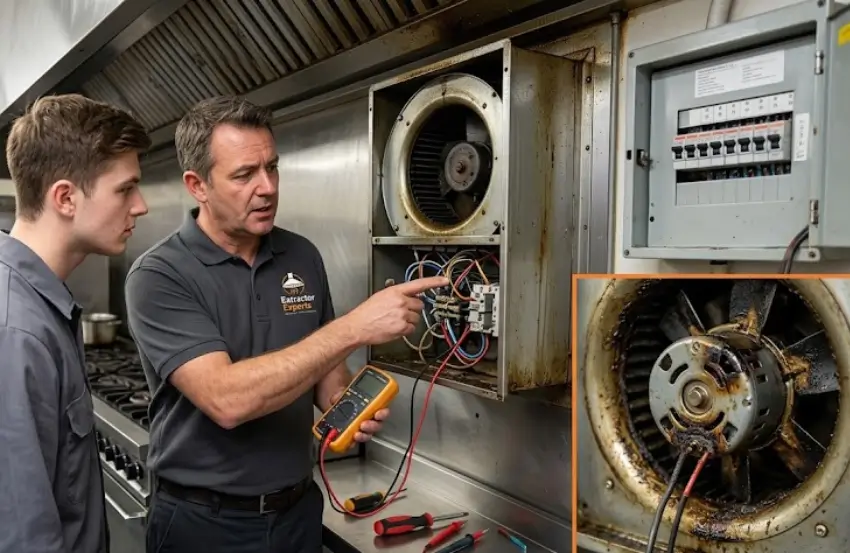
Commercial kitchen extractor fan electrical faults can develop within cables, isolators, motor terminals, control panels or other electrical connections.
Commercial kitchen environments may expose equipment to heat, vibration, grease and moisture. Over time, these conditions can contribute to deterioration, particularly where equipment is incorrectly installed or inadequately protected.
Potential problems include damaged cable insulation, loose terminals, deteriorated connectors and overheating electrical components.
Warning signs may include a burning smell, unusual buzzing from electrical equipment, discoloured enclosures or repeated protective-device operation.
Kitchen staff should never open electrical enclosures or attempt to tighten connections.
A competent electrical professional should inspect the affected installation using appropriate isolation and testing procedures.
4. Faulty Fan Motor Bearings
Bearings allow the fan shaft and impeller to rotate smoothly.
As bearings wear, friction and vibration can increase. In some cases, this places additional mechanical load on the motor, contributing to overheating or overload protection operating.
Common warning signs include grinding noises, excessive vibration, changes in fan speed and abnormal motor temperatures.
Not every bearing fault causes electrical tripping. However, a mechanically damaged fan should be inspected before further operation.
Early investigation may allow individual components to be repaired or replaced rather than requiring a complete fan replacement.
5. Grease Accumulation and Restricted Airflow
Commercial kitchen extraction systems remove air containing heat, moisture and airborne cooking contaminants.
Grease deposits can accumulate on accessible components and within extraction ductwork. Poor maintenance may contribute to contamination, restricted airflow and deterioration of system performance.
Grease deposits on an impeller may also cause imbalance, vibration or additional mechanical problems.
However, restricted airflow does not automatically increase motor current. Its electrical effect depends on fan design, operating conditions and the control system.
An engineer should investigate both airflow performance and motor loading rather than assuming blocked ductwork is responsible for a tripped breaker.
For businesses experiencing persistent ventilation problems, professional commercial kitchen extraction maintenance can help identify contamination, deterioration and other developing issues.
6. Faulty Motor Starter or Control Panel
Commercial extraction systems may use contactors, overload relays, timers, interlocks and electronic controllers.
These components manage fan operation and provide electrical or operational protection.
A damaged contactor, incorrectly configured overload relay, failing control component or defective connection can cause unreliable operation.
Some systems also incorporate safety interlocks connected to other kitchen equipment.
When the fan stops unexpectedly, an engineer should establish whether the motor protection has operated or whether the control system has intentionally prevented operation.
This distinction helps avoid replacing a working motor when the actual fault is elsewhere.
7. Variable Speed Drive Problems
Some commercial kitchen extraction fans use variable speed drives (VSDs) to control motor speed.
A VSD can report faults associated with overcurrent, overheating, supply conditions, motor insulation or drive configuration.
The fault code may provide valuable information, but it should be interpreted using the manufacturer’s documentation.
Repeatedly clearing drive faults without investigating their cause can lead to further equipment damage.
VSD inspection, configuration and electrical testing should be performed by appropriately competent personnel.
8. Moisture Ingress and Earth Leakage
Commercial kitchens generate substantial moisture through cooking, washing and cleaning activities.
Where water enters unsuitable or damaged electrical equipment, insulation performance may deteriorate.
Earth leakage can cause an RCD or RCBO to operate.
A commercial extractor fan RCD tripping may therefore indicate moisture-related deterioration, damaged insulation or another leakage-current problem.
The fault could also be associated with other equipment connected to the same protective device.
A professional assessment should establish the source of leakage before the installation is returned to service.
How Can You Identify Why a Kitchen Extraction Fan Keeps Cutting Out?
The behaviour of the fan can help an engineer decide which components to investigate first.
The following table outlines common symptoms and possible explanations.
| Symptom | Possible cause | Recommended action |
|---|---|---|
| Trips immediately when switched on | Short circuit, starting-current issue or motor fault | Stop use and arrange electrical diagnosis |
| Stops after running for a while | Thermal protection or overload operation | Have motor loading and cooling assessed |
| RCD trips during operation | Earth leakage or insulation fault | Arrange competent electrical testing |
| Fan makes grinding noises before stopping | Bearing or mechanical damage | Arrange mechanical inspection |
| Fan stops intermittently | Control fault, loose connection or protection operation | Record symptoms and request fault finding |
| Fan stops with a VSD fault code | Drive, motor or supply problem | Record the code for the engineer |
| Fan runs but airflow is weak | Ductwork, impeller, design or airflow problem | Arrange a ventilation performance assessment |
These symptoms are diagnostic clues, not proof of a particular defect.
An accurate diagnosis should consider the complete extraction system.
What Should You Do When Your Commercial Extractor Fan Trips?
A tripping extraction fan should be treated as a potential equipment safety issue rather than an inconvenience that can be resolved through repeated resetting.
Stop Operating the Affected Equipment
Stop using the affected fan and follow the site’s established safe shutdown procedure.
Do not repeatedly reset circuit breakers, RCDs, overload relays or motor protection devices.
Where extraction is essential for safe cooking operations, affected cooking appliances may also need to be shut down until adequate ventilation is restored.
Record the Symptoms
Before arranging a repair, record what happened.
Useful information includes the time of failure, whether the fan stopped immediately or after prolonged operation, unusual noises, visible warning indicators and any displayed fault codes.
This information helps the attending professional understand the fault history.
Arrange Professional Fault Finding
A competent professional should investigate the electrical and mechanical condition of the system.
Depending on the fault, the work may involve an appropriately qualified electrician, ventilation engineer or specialist control-system technician.
The HSE advises that maintenance work should be planned, equipment made safe and relevant energy sources securely isolated before work begins.
Avoid Temporary Electrical Workarounds
Never bypass an RCD, remove motor protection, increase a protective-device rating without proper design assessment or interfere with wiring to keep the fan operating.
These actions can expose workers and equipment to serious hazards.
A proper repair addresses the underlying fault while preserving the safety functions of the installation.
How Do Professionals Diagnose Commercial Kitchen Extractor Fan Electrical Faults?
Professional fault finding involves more than identifying which switch has tripped.
The engineer should investigate the relationship between the fan, electrical supply, controls and mechanical components.
Electrical Supply and Protection Assessment
A competent electrical professional may assess the supply characteristics, protective-device ratings, electrical connections and relevant control equipment.
Testing may include insulation resistance, continuity and other checks appropriate to the equipment.
Electronic drives and sensitive components require manufacturer-approved testing procedures to prevent damage.
Motor and Mechanical Inspection
The motor and fan assembly may be assessed for bearing wear, abnormal vibration, overheating, contamination and mechanical resistance.
The engineer may also review the motor nameplate and operating conditions to establish whether the equipment is being used within its specified limits.
Extraction System Performance Assessment
Fan faults sometimes occur alongside broader ventilation performance problems.
An assessment may therefore consider ductwork condition, airflow, impeller cleanliness and the interaction between the extraction system and replacement air supply.
This is particularly important where the kitchen has been modified or new cooking equipment has been installed.
Repair and Verification
Once the fault has been identified, the appropriate professional can recommend repairs or component replacement.
The system should then undergo relevant safety checks and operational verification before being returned to service.
For persistent problems, Extractor Experts provides commercial extractor fan repair and fault finding services.
Can a Tripping Commercial Extractor Fan Be Repaired?
Many faults can be repaired without replacing the entire extraction system.
The appropriate solution depends on the condition of the motor, fan assembly, electrical controls and associated equipment.
Possible repair work may include replacing worn bearings, repairing damaged components, replacing a faulty motor or correcting defects in the control system.
Electrical repairs must be undertaken by personnel competent for the work involved.
A complete fan replacement may be more appropriate where equipment is extensively damaged, unsuitable for current operating requirements or uneconomical to repair.
When Is Fan Replacement Worth Considering?
Replacement should be considered when repeated failures indicate substantial deterioration or when the existing fan no longer meets the kitchen’s operational requirements.
An engineer should consider the fan’s duty, electrical compatibility, installation arrangement, available replacement parts and required airflow performance.
Replacing the fan without reviewing the wider system can leave underlying design or ductwork problems unresolved.
Where significant changes are needed, professional commercial kitchen ventilation design may help establish an appropriate long-term solution.
How Can You Prevent Commercial Kitchen Extraction Fans from Tripping?
Planned maintenance helps identify developing faults before they cause unexpected shutdowns.
Although no maintenance programme can prevent every electrical failure, regular inspection can improve equipment reliability and support safer operation.
Maintain the Fan and Motor Assembly
Fan components should be inspected at intervals appropriate to the equipment, operating conditions and manufacturer’s recommendations.
Relevant checks may include bearing condition, vibration, mounting security, contamination and evidence of overheating.
Changes in noise or operating behaviour should be investigated rather than ignored.
Keep Extraction Components Clean
Commercial kitchen extraction systems require suitable cleaning and inspection arrangements. Grease accumulation should be managed through a maintenance programme appropriate to the cooking process and system condition. Cleaning should be performed safely by competent personnel using appropriate methods.
The BESA DW/172 specification provides industry guidance relating to the design, installation and maintenance of commercial kitchen ventilation systems.
Review Electrical Components
Electrical equipment should be maintained in a condition that prevents danger.
The frequency and extent of inspection and testing should reflect the equipment, its environment, operating demands and previous inspection findings. This approach is consistent with HSE electrical equipment maintenance guidance.
Investigate Early Warning Signs
Unusual vibration, repeated shutdowns, burning smells, overheating and changes in operating performance should prompt investigation.
Early reporting allows managers to arrange an assessment before the problem becomes more disruptive.
Review the System After Kitchen Changes
Changes to cooking appliances, canopy arrangements, ductwork or ventilation controls can affect extraction performance.
Where a kitchen layout has changed significantly, the ventilation system may need reassessment.
This helps establish whether the existing equipment remains suitable for its intended use.
Why Is Reliable Kitchen Extraction Important for Commercial Premises?
Commercial kitchens depend on effective extraction to manage heat, cooking fumes, moisture and airborne contaminants.
A failed extraction fan can quickly affect working conditions, especially during busy service periods.
The consequences may include reduced ventilation, uncomfortable temperatures, operational disruption and concerns about the safe use of cooking equipment.
Extraction failure may also affect connected safety systems or equipment interlocks.
Kitchen operators should follow their site-specific safety arrangements and seek competent advice where the system is not functioning correctly.
Businesses across London and Surrey can arrange professional extraction assessment and repair services rather than relying on temporary workarounds.
Frequently Asked Questions
1. Why does my commercial kitchen extractor fan trip the breaker immediately?
Immediate tripping may indicate a short circuit, excessive starting current, damaged wiring or a motor fault. The precise cause depends on the protective device and system configuration. Stop using the affected equipment and arrange competent electrical fault diagnosis.
2. Can an overheating extractor fan cause the system to trip?
Yes. Excessive motor temperature can activate thermal protection or contribute to overload-related shutdowns. Possible causes include worn bearings, inadequate cooling, mechanical resistance and electrical defects. Professional inspection is needed to confirm the fault.
3. Why does my kitchen extraction fan keep cutting out after running for a while?
A fan that stops after extended operation may have a thermal protection issue, excessive motor loading, an intermittent electrical fault or a control-system problem. The shutdown pattern provides useful information but does not establish the cause on its own.
4. Is it safe to keep resetting a commercial extractor fan circuit breaker?
No. Repeatedly resetting a protective device without investigating the fault is unsafe. The device may be responding to an electrical condition that could damage equipment or endanger people. The system should be assessed by a competent professional.
5. Should I repair or replace a commercial kitchen extractor fan that keeps tripping?
The decision depends on the fault, equipment condition, repairability and operating requirements. Some problems can be resolved through component repairs, while substantial motor damage or unsuitable equipment may justify replacement. A professional assessment can establish the appropriate option.
Get Professional Commercial Kitchen Extraction Fan Repairs
A commercial kitchen extraction fan keeps tripping for several possible reasons, including electrical faults, motor overheating, mechanical deterioration and problems with protective or control components.
Identifying the underlying cause is essential. Repeatedly resetting the system does not resolve the fault and may create additional safety risks.
Extractor Experts Ltd provides commercial kitchen extraction repairs, fault finding and maintenance for restaurants, hotels, catering premises and other commercial kitchens across London, Greater London and Surrey.
Our services include investigating extraction performance problems, repairing commercial ventilation equipment and assessing existing systems for maintenance or improvement.